




Letters to the Editor is a curated selection of the thoughts, ideas, observations and questions we receive from Oakland Report readers. The selections are ones that we, the editors, find interesting, noteworthy, or otherwise worth elevating in a formal letters column.
The views expressed in the Letters column do not necessarily reflect the views of Oakland Report or its contributing authors. Letters may be edited for clarity, length, and conciseness.
Oakland school board members accept our invitation to break bread with each other
Re: “Dear Oakland school board: Dinner’s on us,” Dec. 14, 2025
Thank you for sharing and I would be happy to participate. I would pay for myself for reporting and ethics but appreciate the offer and thank you in the spirit this is offered. Warmly,
Rachel Latta
Oakland
I guess I’m in. Honestly, I have no desire to break bread with the board majority because they have been extremely nasty towards me for years. But I’m willing to again prove the point. I’m in, but I doubt any of the majority would ever agree to it.
Mike Hutchinson
Oakland
I appreciate the invitation to break bread and I would like to accept it. In community,
Jennifer Brouhard
Oakland
Thank you for reaching out! I spoke with one of your colleagues via email (Bob Borek), to let them know.
Patrice Berry
Oakland
We thank these board members for responding to our invitation. To date, four of the seven OUSD board members have accepted. Their willingness to take us up on our offer is a testament to their leadership qualities and their commitment to public service. Oakland Report is making arrangements for the dinner to take place, and our invitation remains open to the other three board members, who have yet to respond.
Help us reach our goal of 10,000 subscribers

Turning the tides
Re: Oakland is beautiful and we deserve better, Dec. 28
I just made a donation. I want you to know how much I appreciate your publication. I’m so tired of the pandering and misleading information that is delivered every day in this city. Because of the nonprofit work I am doing, my cynicism has been validated by first hand experiences. We have a lot of work to do to turn the tides of a city that has grown accustomed to corruption and apathy to the point where it’s become an accepted culture. Thank you for fighting the good fight and keeping people informed.
Meg McAdam
Oakland
Meg, thank you so much for your kind words and for your support. It means a lot to us. With your help and that of other Oakland Report supporters, we believe that yes, we can turn the tides in The Town.
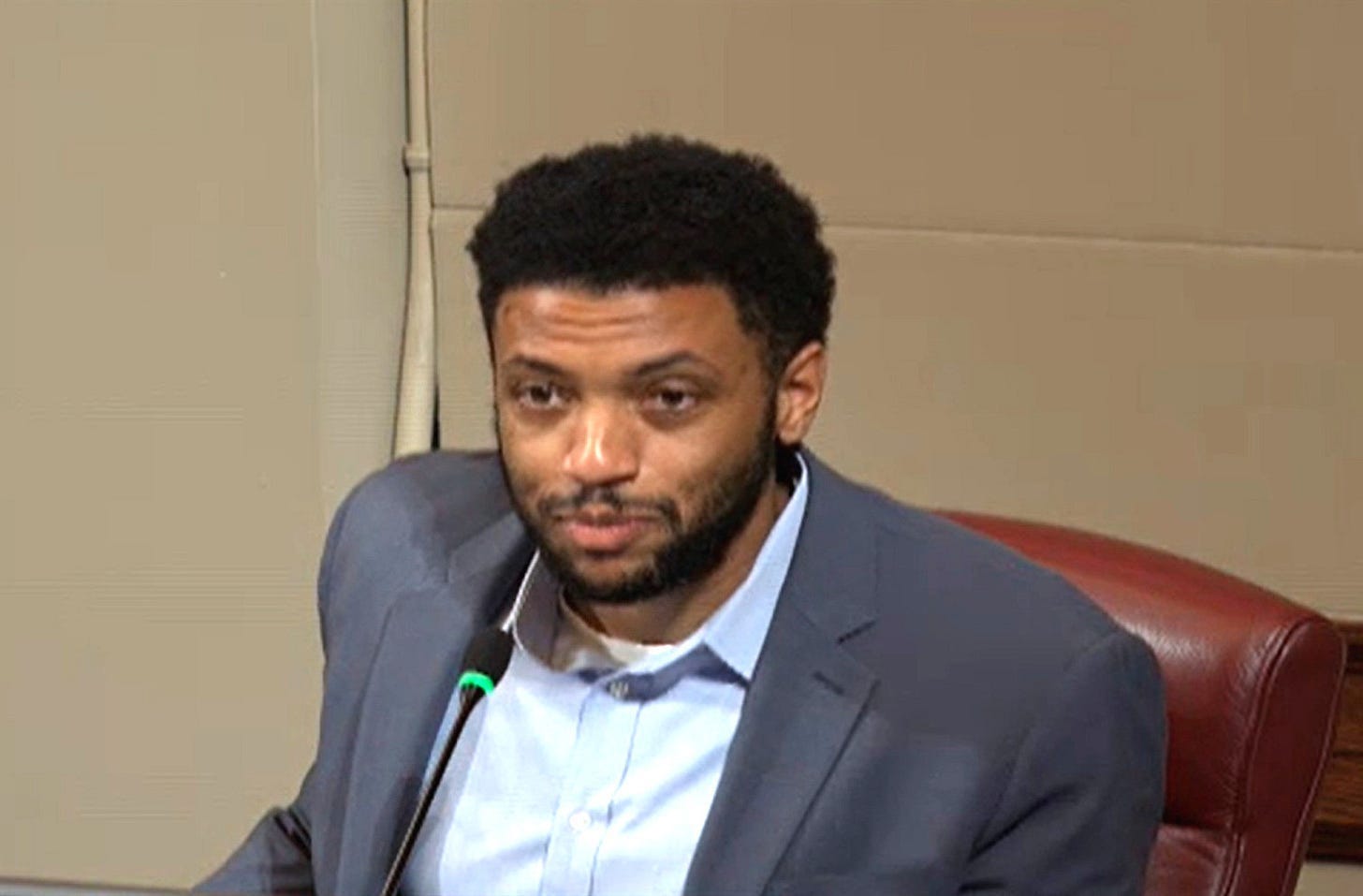
Council member Ramachandran spent officeholder money to hire company linked to her romantic partner
Re: Oakland city council tripled the allowed political contributions to its “officeholder funds.” Agenda Watch, Jan. 6
Thanks for writing about the officeholder accounts. I think you left out a key part of the story: how council member Janani Ramachandran spent so much more than others in a shady way. According to an August 14 Oaklandside article, “Ramachandran spent nearly $18,000, all of which went to a company linked to her romantic partner and her communications director.”
Seth Mazow
Oakland
“Democracy Dollars” apparently wasn’t enough money for city council members
Re: Oakland city council tripled the allowed political contributions to its “officeholder funds.” Agenda Watch, Jan. 6
The City Council encouraged Oakland voters to support publicly-funded “Democracy Dollars” to combat the role of money in politics. Then the city council increases contribution limits, increasing the role of money in politics. Go figure.
Justin Horner
Oakland

Charter reform seems like a good idea, but if you don’t address the broader flaws in our system, it might lead to a trap
Re: “Commentary: Oakland needs a council-manager government — or needs to eliminate ranked-choice voting,” Jan. 10
Loren, I really appreciate how you draw out the deeper dependencies in the governance system — particularly when you get a bad mayor in a strong mayor system.
Reform needs to consider all those linkages and possibilities in designing a future governance. Otherwise you might simply move the brick wall to a new spot, or open up a new trap.
Charter reform seems like a good idea, but if you don’t address the broader flaws in our system, it might lead to such a trap. These flaws amplify each other right now (in addition to our hybrid system and ranked-choice voting).
Few are willing to say it because of the fear of political or social backlash, but I’ll say it. It is my hope that these issues can also be tackled through a reform process.
Our city commission structure often places people without expertise, without sufficient time/resource, without accountability, and often with narrow or conflicted interests in positions of authority over our elected leaders through explicit veto power, or the power to delay decisions.
Closed-door negotiations between public unions and the city is a deep conflict of interest. Unions receive nearly 1-1.7% of the salaries of city employees (which amounts to more than $6 million a year of taxpayer money), some of which is used to elect the politicians that approve those salaries.
Over $4 million spent on political activity by these unions based in Oakland. (See here for filing docs summary: and for example the SEIU filing, here.)
Effectively, unions are a city contractor allowed to contribute to candidates and then negotiate with them behind closed doors. Greater transparency is critical.
There is no state or other external requirement for the fiscal transparency that is essential to good governance. As we have seen recently, the city can delay financial reporting (or skip it) at will — leaving the council in the dark and with limited options when things get tough.
There seems to be a notion that a city job is lifetime employment, regardless of employee performance, or of city needs. There are some amazing talents in the City of Oakland, and some deeply committed employees. But like every private or public organization ever, there are employees who don’t perform.
If talented folks are not advanced based on merit, or if their every effort at service improvement is crushed by others’ apathy, they get frustrated and leave. A merit based culture starts at the top — and “the top” is selected and held accountable by the system of governance.
If the city cannot contract its workforce when needs change for finances change, we are doomed to wasteful, unsustainable governance.
There is a lack of any real accountability for long-term decisions — e.g. spending decisions on contracts or pensions that won’t impact current elected officials, but could sink the city years in the future. Whether it be road repairs (and millions of dollars in lawsuit payments for the lack thereof), or pensions, or broken contracts leading to decades-long lawsuits, we’ve seen those decisions play out repeatedly over the past 20 years. Unclear how to solve this, but those past decisions by electeds — who never felt their impact — are a large part of our current problems.
Tim Gardner
Oakland
See this related article:

The long-term damage that a bad strong-mayor can foist onto the city is too great
Re: “Commentary: Oakland needs a council-manager government — or needs to eliminate ranked-choice voting,” Jan. 10
It’s great to see Loren Taylor reconsider his earlier preference for a strong-mayor system and now support a council-manager program for Oakland. We at the Oakland Charter Reform Project agree — but for different, almost opposite, reasons.
For us, the bad outcomes that arrive and derive from concentrated executive power in the hands of an unqualified, corrupt, incompetent, or immoral mayor are obvious and inevitable, regardless of whether the mayor is elected via ranked choice voting or straight-away. The long-term damage that a bad strong-mayor can foist onto the city is too great; the recall bar is too high; and four years is too long to wait when change is necessary. Witness our current federal President.
The beauty of the council-manager system is that, if the city manager is doing a poor or unacceptable job — if the potholes aren’t being filled, if the graffiti isn’t being abated, if the 911 calls are delayed — the city council can turn on a dime, terminate that person, and bring in a new and better administrator within months, not years.
In that way, the council-manager system best evinces representative democracy: your directly-elected council is responsible for and capable of overseeing city operations, and if a majority of councilmembers believe that change is necessary, then they can make it so. That is not the case in a strong-mayor system.
This is why 99 out of 101 Bay Area cities have chosen the council-manager model, and Oakland should, too.
Steven Falk
Oakland

Biased toward a “strong mayor” system after working in Atlanta
Re: “Give Oaklanders what they want and need: a strong mayor,” Jan. 22
As one of only two two-term mayors in this millennium, I think former mayor Schaaf has an important perspective in this discussion. I will always be biased toward a strong-mayor system because I worked for such an amazing mayor in Atlanta (Keisha Lance Bottoms). I would be curious and grateful to learn more about how a strong-mayor system might have changed or impacted former mayor Schaaf’s two terms as mayor. From my experience, it was most helpful as a department head to know beyond any doubt that the boss was the mayor. I worked for an excellent administration and would be most happy to return to that type of professional environment.
Josh Rowan
Oakland
Any charter amendment that does not eliminate ranked-choice voting is a waste of time
Re: “Give Oaklanders what they want and need: a strong mayor,” Jan. 22
Libby did a great job here of basically regurgitating the SPUR report on this topic. No shade, I did the exact same thing as it’s just the best body of work out there, in my opinion.
Basically what I have been saying for nearly four years now and ran on for mayor in 2022 and everyone jeered or ignored me? Cool story. It’s hard being years ahead all the time.
Any charter amendment that does not eliminate ranked-choice voting (RCV) is a waste of time. RCV has demonstrably harmed local voting turnout, confidence, etc. Especially in communities of color and the working class. It’s tantamount to voter suppression and it’s extremely insidious how these blatant facts and data points are ignored in a city obsessed with “equity”.
We need to talk about it more. END RCV.
Seneca Scott
Oakland
Seneca, thank you for your comment. Former mayor Schaaf’s commentary is focused on Oakland’s form of governance-- an important and relevant current topic of debate. It sounds like you agree with her main point, which is that Oakland will function better with a strong-mayor form of government. With respect to ranked-choice voting, there is room in the charter reform conversation for other potential changes. It does not have to be limited to just one thing. Oakland Report is open to publishing other commentaries about charter reform, with ranked-choice voting being a particularly relevant aspect, and we invite you to submit your perspective on the topic. Thanks again for your support and for the good discussion.

“We own the streets now.” Open prostitution has exploded since loitering was decriminalized
Re: Oakland prostitution enforcement and support services up for revisions, Jan. 26
Reporting on the loitering question would benefit from comparing it to the time loitering law was actually active, until a few years ago, when now State Senator Scott Wiener proposed and successfully passed a law decriminalizing loitering, which led to the pimps openly claiming “we own the streets now” on social media, and an unprecedented increase in open child prostitution. So while I appreciate the concerns about over-enforcement of loitering, the evidence in the past is clear that this hasn’t happened when the law was on the books — it was just another tool police had to enforce prostitution. Currently what you need to demonstrate to lead to a charge on prostitution is actual money changing hands. This is a very high bar. Loitering is much lower and it’s a critical tool to combat prostitution for that reason!
Many residents complain about the explosion of open prostitution since the loitering law was decriminalized. This could be reversed, and increase quality of life in these neighborhoods, and reduce some of the prostitution but probably not all. The average age to start prostitution on International Boulevard is 12 years old according to OPD, so this is also something to consider as the risks of potential over-enforcement are weighed against the protection of victims, which include children. “But what if someone is profiled” is a lower concern than that to me, particularly since over-enforcement of the law at the DA level is not taking place in Oakland and if someone is pulled off the streets will likely be out soon after.
I enjoy your reporting and am always amazed at what’s going on in Oakland, but it’s probably over here too just no one covers it like you do. Expand to Contra Costa please!
Julia Schaletsky
El Cerrito
Julia, thank you for your letter. Oakland Report published a counterpoint written by council member Charlene Wang’s policy director, Bridget Ruiz Rivezzo, that reiterated and expanded on the council member’s justifications for the new ordinance. The full city council approved the ordinance on February 3.
And who knows? – perhaps Oakland Report will expand to Contra Costa County someday. In the meantime, let us know if there are specific issues in CoCo County you think deserve a closer look.
See this related article:

The bad guys looking to abuse minor girls know who they are
Re: “Counterpoint: Oakland prostitution enforcement and support services up for revisions,” Jan. 27
As a former reporter at both the San Francisco Examiner and San Francisco Chronicle who investigated prostitution in San Francisco, I can attest that the response by Bridget Ruiz Rivezzo is right on the money. The concern must be for the young victims of sex trafficking, and not to protect or shield the abusers. As she writes: “Instead of penalizing those being trafficked, the ordinance shifts the burden to where it belongs: on the buyers, traffickers, and nuisance businesses that facilitate this industry.”
The bad guys in business and in their cars looking to abuse or profit off minor girls know who they are. Good for Oakland for taking this important step to protect the girls.
At one point, SF cops, with the help of nonprofits, started what they called a “John’s School,’‘ requiring men who solicited to take a class in which they heard from the victims themselves -- and were schooled on the health issues like STDs that came with soliciting prostitution. It also appeared to be effective: one look at a genital warts slide, and a lot of the Johns said they were never coming back. Oakland might consider this also.
Carla Marinucci
Oakland
Carla, thank you for your comment, and for reading Oakland Report – it means a lot to us. We agree that the “bad guys know who they are,” and we agree that human trafficking is extremely bad and harmful and it should be stopped.
One of the points of our article was that the city’s new ordinance includes language that appears to encourage appearance-based profiling by police based on their subjective observations of people’s income levels, physical attributes and demographics, and places of residence alone. As our article noted, this form of appearance-based profiling by law enforcement is often criticized, rightly, by civil rights advocates when it is directed at some groups – yet here those concerns seem not to apply.
The salient point is that the ordinance potentially has a flaw that undermines its stated intent to catch bad actors with charges that hold up in court. As noted in our article, the vague definition of the “loitering with intent” offense and the potential for appearance-based profiling “could potentially leave the door open to legal challenges and increased risk to the city by defendants (or more precisely, their attorneys) who, under these definitions, potentially could argue that they were illegally stopped and prosecuted merely for circling the block in the ‘wrong’ neighborhood while appearing to fit a certain profile in the eyes of the arresting officer.”

OUSD should come up with a plan for school closures that shows thought, not panic
Re: “Commentary: Why I changed my mind about Oakland school closures,” Jan. 20
I am an OUSD parent with two teens in the system, at Claremont and Oakland Tech. I am not opposed to closing schools, but I’ve noticed that the plan to close schools is always presented as an immediate and urgent need.
I’m wondering why OUSD can’t come up with a multi-year, staged plan (like, 3-5 years, rather than 1-1.5 years) for closures and consolidations that would actually lay out these savings in a way that shows thought, not panic. Can you tell me why these are never pursued?
Also, can we look back on what we’ve learned from prior recent closures? What savings were recognized from the painful closure of Kaiser and consolidation with Sankofa? If the answer is that it was nominal or nonexistent, perhaps that should come into account.
Donate to support our work. We are a nonprofit 501(c)(3) organization.
Lastly, I’m not sure what you mean regarding charter schools. It seems to me as if charters have historically taken enrollment from OUSD, and have also taken over sites that were deemed budget-encroaching from OUSD. Are you saying that this has now stabilized and that enrollments across the board are going down in Oakland?
Ian C.
Oakland
These are excellent questions. As much as Director Mike Hutchinson and I have had strong disagreements over the years, your idea of a multi-year staged plan that frames the need as being based on long-term demographic change (due to lower birth rates and the impact of gentrification and displacement) rather than immediate fiscal crisis, was exactly what he was proposing in his “3Rs” resolution of 2024. That was also the direction that former Supt. Kyla Johnson-Trammell was proposing to Board members in 1-1 conversations that same year.
As far as charters, it has been hard to name the exact savings because there are so many variables at play. Specifically for Kaiser/Sankofa, opposition to the merger created a lot of negative feelings that made it less successful than it otherwise could have been. However, CCPA, Frick, Lockwood, and Elmhurst are currently much stronger school communities than they were pre-merger. I agree with you that OUSD has not focused on the success of those mergers sufficiently, but absolutely should.
Finally, yes, enrollments are going down across the board at both charter and district. (This year, the decline in OUSD was masked by an increase in Transitional Kindergarten due to the eligibility window expanding.) In 2012, some of the schools that were closed converted to charters. However, that was a much charter-friendlier time. None of the sites that had mergers or closures in 2018-2020 turned into charters. Over the last 18 months, 4 charter schools closed (NOCCS, Urban Montessori, OCHS and Aurum), and for the first time, many of those students chose to come back into OUSD.
– Sam Davis, former OUSD board president and author of our January 20 commentary, “Why I changed my mind about Oakland school closures”

More property tax is not a progressive vs. MAGA issue
Re: “New taxes: Oakland public employee unions collecting signatures for a new parcel tax,” Feb. 3
I have been a proud union member my entire working life. Still am. But let’s all stop for a minute and consider this from a logical – not ideological – perspective.
This is not a MAGA vs. Progressive issue. This is flat-out a special interest group trying to get still more money from working Oaklanders to pay for still higher city salaries and pensions in a town that already has one of the highest tax rates in the state (which means the entire nation) but has among the fewest vital services.
A “parcel” tax is a straight-up property tax – but easier to market to those who don’t really know this is an ongoing strategy for a handful of politicians, their consultants and their financial puppet masters to get around Prop. 13.
In the long term, everyone including home owners, small business owners – and eventually renters – have to fork out still more so this special interest group profits. There has to be some rational accountability for feeding this insatiable beast.
Roland De Wolk
Oakland
Bottomless potholes, multiple taxes
Re: “New taxes: Oakland public employee unions collecting signatures for a new parcel tax,” Feb. 3
I will be happy to pay a little more tax after they start fixing the potholes. If Orinda can do it, we can too. Good challenge for Barbara Lee’s governance. Fixing roads are a strong signal that we have pride in our city.
Josh Bersin
Oakland
Josh - Thank you for your comment. With respect to potholes, you may find these two facts interesting:
Oaklanders already have authorized the City of Oakland to increase taxes -- twice -- since 2016 to fix potholes and other road maintenance needs, by financing the issuance of a total $1.45 billion in infrastructure bonds, with $640 million dedicated to transportation projects including street repaving.
Despite these 9-figure investments by Oakland taxpayers toward basic infrastructure like road repairs, Oakland’s Pavement Condition Index (PCI) in 2023 was rated at 57 -- in the “At Risk” range. Meanwhile, neighboring Orinda’s PCI rating was a dismal 48 in 2012 -- in the “Poor” range -- but a decade later in 2023, Orinda’s PCI rating had improved to 84 -- in the “Good” range -- after that city’s voters approved sales tax and property tax increases to fix Orinda’s public roads.
If Orinda can do it, why can’t Oakland? It can’t just be the difference in median income and tax revenue between the two cities. The City of Orinda’s operating budget is a fraction of Oakland’s. Orinda’s total operating expenditures in FY 2023-24 were a paltry $27.9 million compared to Oakland’s $1.66 billion.
Thank you, everyone for your comments; the discussion is appreciated.

Editors’ note
We recognize and love that Oakland is a complex city of nearly half a million people with so many unique lived experiences and perspectives. It’s what makes Oakland so beautiful. In that spirit, we don’t need to agree with every viewpoint we share in Letters. However, we also don’t have the time, space, or inclination to publish letters that are not helpful or that don’t meet our standards.
We appreciate readers’ comments on the topics we cover in Oakland Report, and observations about Oakland politics and governance in general. We welcome letters that are grounded in reason and evidence that can be rationally examined. We may respond to some letters. We may reject some letters. We may fact-check some letters. Other letters we may let speak for themselves. Write to us at letters@citizensoakland.org.
DONATE TO SUPPORT OUR WORK

We are a 501(c)(3) charitable nonprofit based in beautiful Oakland, California. Our mission is to make truth more accessible to all Oakland residents through investigative reporting and evidence-based analysis of local issues.
Thank you.
Whether it's Oakland, BART or EBMUD or SF, virtually all larger local jurisdictions are controlled by their public employees unions. Instead of the bosses selecting their employees, we get the employees selecting their bosses. This is managed by political contributions to candidates. No one has more self-interest than the unionized employees. The payback occurs when the unions and elected officials are negotiating wages, benefits and work rules.
There was an almost successful attempt to correct this problem in 2012. Prop 32 got 44% of the statewide vote although it was massively outspent by the unions. This measure would have prohibited payroll deductions to unions from automatically going to political candidates. Of course union members could individually donate to their favorite candidate, but the massive pipeline of dues to politicians would have been interrupted.
Whether it's BART 's fiscal cliff, or Oakland’s endless financial mess, it won't be fixed until there's a correction to the basic financial structure that prevents local government efficiency and makes every project or service cost more you could imagine. Bring back another try at Prop 32 of 2012.
Thanks Oakland Report. I agree, we need to get rid of Rank Choice Voting. Just creating a new charter without changing both the system of voting and the quality of our leadership will create more problems. Giving more power to a bad mayor and city council will end up being a disaster for Oakland. We need new leadership that can work together. We also need to replace the "police commission" with an advisory board to work with our great police officers. Mindy Pechenuk, candidate for Oakland Mayor 2026