



Editor’s note
Oakland Report publishes commentaries from influential voices about current issues in Oakland. We invite counterpoint commentaries from other leading voices. Do you have something to say on this issue or others? Visit our About page for more information.
BY SENECA SCOTT
Oakland’s emotional blackmail
“Words are, of course, the most powerful drug used by mankind.”
— Rudyard Kipling, “Surgeons and the Soul”1
For years, as Oakland’s civic health decayed, city leaders and advocates have repeatedly claimed that the city’s failures are someone else’s fault,2 criticisms are personal attacks,3 and demands for accountability are acts of oppression.4
Oaklanders are routinely asked to finance dysfunction— and to applaud leaders who substitute performative altruism for measurable results.
Consider Oakland’s recurring ritual of asking voters to approve more taxes. Nearly every election, voters are presented with new moral ultimatums and new taxes that are presented as solutions to our most urgent issues.5
A common emotional appeal deployed by city leaders and advocates is that if you oppose the latest tax, you don’t care about supporting “essential services,” or “working families.”6
See this related article:

The city of Oakland has broken its promises to voters in three of the last four parcel tax measures
Voters routinely approve these taxes— leading to Oakland having the highest taxes per capita among comparable cities.7
Ironically, Oakland’s high taxes are driven by its multiple layers of regressive flat-rate parcel and sales taxes that disproportionately burden working families.8
The City Council has become so confident in its ability to pass tax increases that it built voter approval of yet another tax increase into its last budget— before a tax measure was even drafted, much less placed on the ballot and approved.
Aside from being fiscally irresponsible, the move signaled that Oakland’s leaders are supremely confident that Oakland voters will continue to tax themselves (and others) regardless of the quality of services delivered— and despite the city’s broken promises in previous tax measures.9
The most recent parcel tax, Measure NN in 2024, was also sold as a fix-all public safety solution, capitalizing on Oaklanders’ concerns about public safety and promising to maintain a minimum of 700 sworn police officers.
Shortly after voters approved the tax, the city declared a “severe fiscal emergency” and abandoned the promise of 700 officers.

New tax, same playbook
Now voters face Measure E, yet another parcel tax, under similar conditions of public concern about public safety— and Oakland’s chronic failure to maintain a level of safety that other communities take for granted.10
Notably, despite forecasting $100-million plus budget deficits in each of the next five years, the city declared a budget surplus in February— setting the stage for pre-approved conditional raises for public-sector unions.11
An Oakland Report analysis found that 44% of the $34 million annual revenue would be absorbed by those raises in each year of the proposed Measure E parcel tax.12
The public is expected to forget yesterday’s promises and finance tomorrow’s excuses. And just like for Measure NN in the 2024 election cycle, the firefighters union IAFF Local 55 is doing much of the political heavy lifting for Measure E in 2026.13
Firefighters are one the most respected professions in America. That reservoir of public trust is precisely why they are so valuable to a political machine reliant on emotional blackmail.
Oakland has used this playbook repeatedly over the past 20 years: wrap a tax increase in the uniform of a firefighter, threaten fire station closures, and mention 911 response times. Dissenters are then characterized as ‘anti-firefighter,’ or ‘anti-tax,’ short-circuiting critical evaluation of the proposed tax on its merits.
See this related article:

Billionaires and public sector unions
The ‘emotional blackmail’ tactic appears repeatedly in other areas. Consider the response of influential local progressives to the recall of former Oakland Mayor Sheng Thao, who now faces a federal corruption trial this fall. Thao’s supporters and advocates’ go-to tactic was to dismiss the recall as “right wing.”14
Nonetheless, Thao’s actions in office were deemed so egregious that the recall succeeded with a supermajority. Districts 5, 6, and 7— the most working-class and heavily minority districts in Oakland, and the neighborhoods that bear the harshest consequences of failed governance— voted most decisively for removal.
Consider also the now-familiar ad hominem tactic used by opponents of Thao’s and former district attorney Pamela Price’s recalls: invoking the specter of the “Piedmont billionaire.” It polls well. It sounds sinister.
It is also imprecise. Take for example Philip Dreyfuss, the Piedmont resident who became the largest donor to the Thao recall effort, and to whom the “Piedmont billionaire” label has been liberally applied by progressive critics ever since.15
Dreyfuss is indeed wealthy, but he is not a billionaire. He is a wealthy political donor—but that is not exactly a rarity in modern politics. Public campaign donation disclosures and news reports estimate that Dreyfuss spent approximately $1.3 million in Oakland’s 2024 elections— by no means a small amount.1617
By comparison, Oakland-based public employee unions spend over $4 million per year on political activities. See here for a summary of financial filings; and for example the SEIU Local 21 filing, here.
The city’s public sector unions bring in $6 million per year in union dues from Oakland alone— dues that are withheld from city employees’ paychecks through automatic payroll deductions.
What makes the progressives’ rhetoric about “Piedmont billionaires” especially revealing is its selectivity.
Other wealthy Piedmont-based progressive donors such as Quinn Delaney and Wayne Jordan have contributed substantial sums to Oakland causes and campaigns, including criminal-justice reform and efforts associated with the ‘defund the police’ movement.18 Yet Delaney and Jordan are celebrated by progressives as philanthropists and civic visionaries.
The difference is not wealth. It is ideological alignment.

Another example: when Brenda Harbin-Forte ran for Oakland City Attorney, critics attempted to tie her to the ‘coal industry’ because one of her donors, Philip Dreyfuss works for Farallon Capital, a firm that, like many large investment funds, has at times held fossil-fuel-related investments.19
Guilt by association became a substitute for substantive argument.
Which makes the current enthusiasm among many progressives for California gubernatorial candidate Tom Steyer particularly striking. Steyer, after all, founded Farallon Capital Management. Yesterday, a tangential connection to Farallon was treated as moral contamination.
The hypocrisy should be striking enough to arouse skepticism of such labels among voters, but many Oaklanders appear to have been bullied into silence.
See this related article:

It is reasonable to fear potential negative repercussions to one’s career and reputation for speaking out against powerful interests. The purveyors of emotional blackmail leverage this through continuous reminders of their considerable power and influence, and demonstrations of their willingness to apply it through ad hominem attacks that divert attention away from the substance of a given issue.
The late social critic Christopher Lasch warned that elites often cultivate sentimentality while losing the capacity for responsibility.20
That diagnosis feels painfully relevant in Oakland. We are governed by leaders fluent in therapeutic language, symbolic gestures, and moral accusation— but strangely unable to fill potholes, balance budgets, maintain order, or consistently tell the truth.21
See this related article:

Such is the manner in which city leaders and their advocates so confidently— some would say arrogantly— ask residents to pay more taxes while receiving the same or fewer services, enduring broken promises, and disproportionately burdening residents who can least afford it.
For a city to tell struggling families they must sacrifice again while insiders evade accountability and fail to improve the basics of city services— safety, cleanliness, and accountability— is wrong.
Oaklanders are generous people, but generosity has been exploited. The way forward is not through cynicism, but through healthy skepticism ground in the facts and evidence. A healthy city requires empathy, yes— but also discipline, integrity, and competence.
Oakland has had enough emotional blackmail. It is time for accountability.
The views expressed in our Commentaries do not necessarily reflect the editorial views of Oakland Report or its contributing writers. Learn more
ABOUT THE AUTHOR
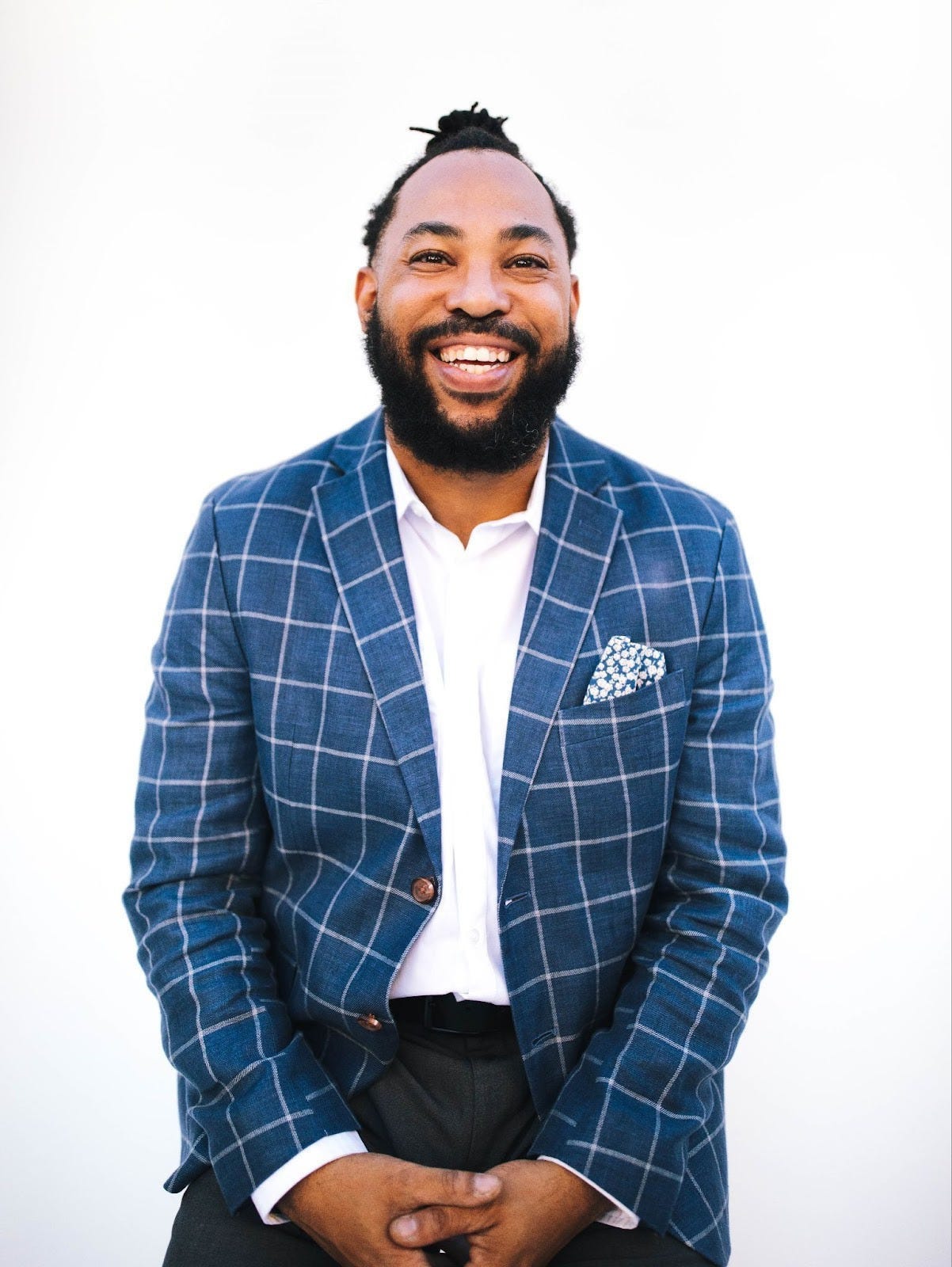
Seneca Scott is a political strategist, writer, and organizer working at the intersection of media, power, and civic reform. Based in Oakland and Nashville, he has become a prominent voice on municipal governance and institutional accountability in America’s cities.
A national CBS contributor, Scott has appeared in local, national, and international outlets analyzing public-sector politics, urban decline, and political realignment. He is best known for his leadership role in the successful recall of Oakland’s former mayor— a grassroots effort that placed government accountability at the center of public debate.
Scott previously served as East Bay Director for SEIU Local 1021, representing thousands of public-sector workers and leading major contract campaigns and labor actions. As an organizing director for multiple unions across California, he built worker-led coalitions and negotiated complex agreements in highly charged political environments.
His writing has appeared in Newsweek, Compact Magazine, City Journal, and The Free Press, where he focuses on governance, fiscal policy, and the future of American cities.
A graduate of Cornell University’s School of Industrial and Labor Relations, Scott ran for mayor of Oakland in 2022 on a charter reform platform advocating a stronger mayoral system, drawing on SPUR’s 2021 report, Making Government Work. During the recall effort, he founded Gotham Oakland, an independent media platform dedicated to exposing municipal corruption and challenging local political dysfunction.
Through consulting, media, and organizing, he works to advance transparency, fiscal discipline, and institutional reform at the local level.
BECOME A SUPPORTING MEMBER

Oakland Report provides accurate, unflinching, data-driven reporting and analysis that you will find nowhere else. If you value our work, please donate. All contributions go directly to sustaining and growing our nonprofit work:
Kipling, Rudyard. “Surgeons and the Soul,” Address by Rudyard Kipling at the Annual Dinner of the Royal College of Surgeons, London, Feb. 14, 1923. https://www.anthologialitt.com/post/rudyard-kipling-surgeons-and-the-soul
Howland, Lena. “Audit: Absent leadership, poor communication led to Oakland missing out on $15 million grant.” ABC 7 Eyewitness News, May 1, 2024. https://abc7news.com/post/city-auditor-reveals-how-oakland-missed-out-on-grant-money-last-year-intended-to-help-fight-retail-crime/14751537/
Ravani, Sarah. “Oakland city leader chastises council members for remaining silent during ‘personal attack’ on staffer.” San Francisco Chronicle, Dec. 5, 2019. https://www.sfchronicle.com/bayarea/article/Oakland-city-leader-chastises-council-members-for-14886287.php; https://archive.is/hxnVX
Talerico, Kate. “Oakland council balks at nearly $1M fine to property owner who cut down 38 trees on Claremont Ave.” San Francisco Chronicle, Apr. 14, 2026. https://www.sfchronicle.com/eastbay/article/oakland-tree-cutting-fine-hearing-22205973.php; https://web.archive.org/web/20260416220535/https://www.sfchronicle.com/eastbay/article/oakland-tree-cutting-fine-hearing-22205973.php
Reinhart, Sean S. “Oakland union boss threatens fire station closures unless voters approve tax hike – despite the city’s past broken promises.” Oakland Report, Apr. 13, 2026. https://www.oaklandreport.org/p/oakland-union-boss-threatens-fire
County of Alameda. “Voter information guide: statewide direct primary election, Tuesday, June 2, 2026.” Alameda County Registrar of Voters, April 2026. https://acvote.alamedacountyca.gov/acvote-assets/02_election_information/PDFs/20260602/VIG/june022026vigeng.pdf
Neditch, Nicole et al. “Balancing Oakland’s budget: Nine recommendations for closing the city’s structural deficit to move toward fiscal solvency and economic growth.” San Francisco Bay Area Planning and Urban Research Association, May 2025, p. 17. https://www.spur.org/sites/default/files/2025-05/SPUR_Oakland_Budget.pdf
Reinhart, Sean S. “Oakland taxes hit deep East Oakland’s homes up to 48% harder than Rockridge’s.” Oakland Report, Apr. 20, 2026. https://www.oaklandreport.org/p/20260420-oakland-taxes-hit-deep-east-oakland
Mukherjee, Shomik. “A new Oakland tax faces voters — with a loophole that lowers the bar .” The Mercury News, https://www.mercurynews.com/2026/04/13/oakland-parcel-tax-june-2026-details/; https://archive.is/2XDHC; https://archive.is/dtNuo
Oakland Chamber of Commerce. “2025 Pulse of Oakland Poll Results.” Oct. 23, 2025. https://www.oaklandchamber.com/2025-pulse-of-oakland-poll-results/
Talerico, Kate. “A budget plot twist in Oakland: From ‘fiscal emergency’ to $17 million in the black.” San Francisco Chronicle, Mar. 4, 2026. https://www.sfchronicle.com/eastbay/article/oakland-budget-plot-twist-21947267.php; https://archive.is/qld1Y
Reinhart, Sean S. “44% of Oakland’s proposed $34 million tax increase would go to union payouts.” Oakland Report, Feb. 22, 2026. https://www.oaklandreport.org/p/20260222-parcel-tax-union-payout
IFPTE Local 21. “Labor and community leaders kick-off Oakland’s Yes on Measure E campaign to protect essential services & keep fire stations open.” PR Newswire, Apr. 10, 2026. https://www.prnewswire.com/news-releases/labor-and-community-leaders-kick-off-oaklands-yes-on-measure-e-campaign-to-protect-essential-services--keep-fire-stations-open-302739661.html
Manigo, Pecolia. “2024 Oakland and Alameda County general election results.” Oakland Rising Action website, accessed May 2, 2026. https://oaklandrisingaction.org/2024-oakland-alameda-county-general-election-results/
Garofoli, Joe. “A Piedmont hedge fund manager is pouring huge sums into Oakland races. Why won’t he talk about it?” San Francisco Chronicle, Oct. 30, 2024. https://www.sfchronicle.com/politics/joegarofoli/article/phillip-dreyfuss-oakland-19875252.php; https://archive.is/0TwOt
Open Disclosure Oakland. “Foundational Oakland Unites, Oakland November 5th, 2024 general election.” Open Disclosure Oakland website, accessed May 2, 2026. https://www.opendisclosure.io/committee/1467180/
Manigo, Pecolia. “New data: Big money’s impact on Oakland elections.” Oakland Rising Action, Mar. 27, 2025. https://oaklandrisingaction.org/press-release-new-data-big-moneys-impact-on-oakland-elections/
Adenjii, Ade. “Inside philanthropy Akonadi: meet a couple focused on racial justice in the Bay Area.” Akonadi Foundation, May 2, 2021. https://web.archive.org/web/20251005162249/https://akonadi.org/in-the-news/inside-philanthropy-akonadi-meet-a-couple-focused-on-racial-justice-in-the-bay-area/
Wolfe, Eli. “Oakland loses appeal in coal legal battle.” The Oaklandside, Jun. 30, 2025. https://oaklandside.org/2025/06/30/oakland-loses-appeal-in-coal-legal-battle/
Nazaryan, Alexander. “30 years ago, this book saw the coming backlash against elites.” New York Times, Apr. 4, 2025. https://www.nytimes.com/2025/04/04/books/review/christopher-lasch-the-revolt-of-the-elites-trump.html; https://archive.is/iserZ
Reinhart, Sean S. “Oakland can’t sell infrastructure bonds approved by voters due to fiscal mismanagement, Grand Jury reports.” Oakland Report, Nov. 3, 2025. https://www.oaklandreport.org/p/oakland-cant-sell-infrastructure
This article sparked a memory. I served on my local school board’s facility and technology committee. We had a large number of roof replacement projects at specific schools that were being paid for by a sales tax program. We had a tropical storm move through Atlanta and damage the roof of a school that was not part of the replacement program. We could NOT use the funds from the voter approved sales tax program to address the emergency because the emergency project was not on the project list approved by the voters. The public was quite harsh with us over this matter. We followed the rules, which was the sole purpose of the committee. There was no “eject” for emergencies. When everything is an emergency, nothing is an emergency.
I like when voters have the option to approve taxes for specific purposes or projects. I have managed numerous sales tax and bond programs in my career. I might suggest eliminating the “eject” option that allows the city to use the funds for any purpose in the event of a fiscal emergency. These tax programs should be managed separately from the general fund. Emergencies should be managed separately as well.