


PART THREE OF A SERIES
Oakland Report is examining Oakland’s First Friday festivals and the neighboring Uptown arts and entertainment district. In our first installment, we found late-night crime increases an average 44% near the Fox Theater on festival nights. In our second installment, we tested the effectiveness of the city’s new safety plan at the June 5 festival. In this installment, we look at the economic and cultural engine at the center of it all: the Fox Theater.
Uptown Oakland’s cultural and economic engine
Standing inside The Den, the bar that sits just to the north side of the Fox Theater in Uptown Oakland, general manager Tony Leong spoke candidly about the state of the Uptown neighborhood — and about what he and neighboring businesses see as an opportunity to revitalize the district.
“We are Oakland’s greeting card and doorstep, and often people’s first impression of Oakland. Why is solving this [late-night street takeover] problem not a priority? The city deserves this to be the area of culture, especially with the venue already here.”
— Tony Leong, Fox Theater general manager, June 2026
The “problem” is the one Oakland Report documented in the first two installments of this series: reported crime increases an average 44% in the late-night hours near the Fox Theater on the nights of First Friday festivals, driven largely by chaotic street takeovers that have routinely converged in front of the venue after the festivals.1
Video clip 1. Warning: graphic content. Compilation of chaotic after-hours street takeover scenes in the streets near the official First Friday event. (Source: Instagram / various accounts)
Social media posts suggest these unsanctioned gatherings have become more organized over time — and their effect reaches beyond the incidents themselves, into the public perception of Oakland and the revenue of every business in the district.
“It’s a death by a thousand cuts,” the venue’s manager said. “If [theater patrons] drive down here and their car gets broken into, it shatters their peace of mind and becomes a night out that wasn’t fun. Then, they’ll start going to neighboring cities for events.”
The data suggests that the stakes are considerable. The Fox Theater is not merely a bystander to the neighborhood’s late-night troubles — it is, by most available measures, the economic and cultural engine of the Uptown arts and entertainment district.
Key findings
The Fox Theater hosts more than 300,000 attendees a year and has held over 1,700 events since reopening in 2009, according to figures provided by the venue. Its $75 million restoration is widely credited with catalyzing the revival of the Uptown arts and entertainment district.23
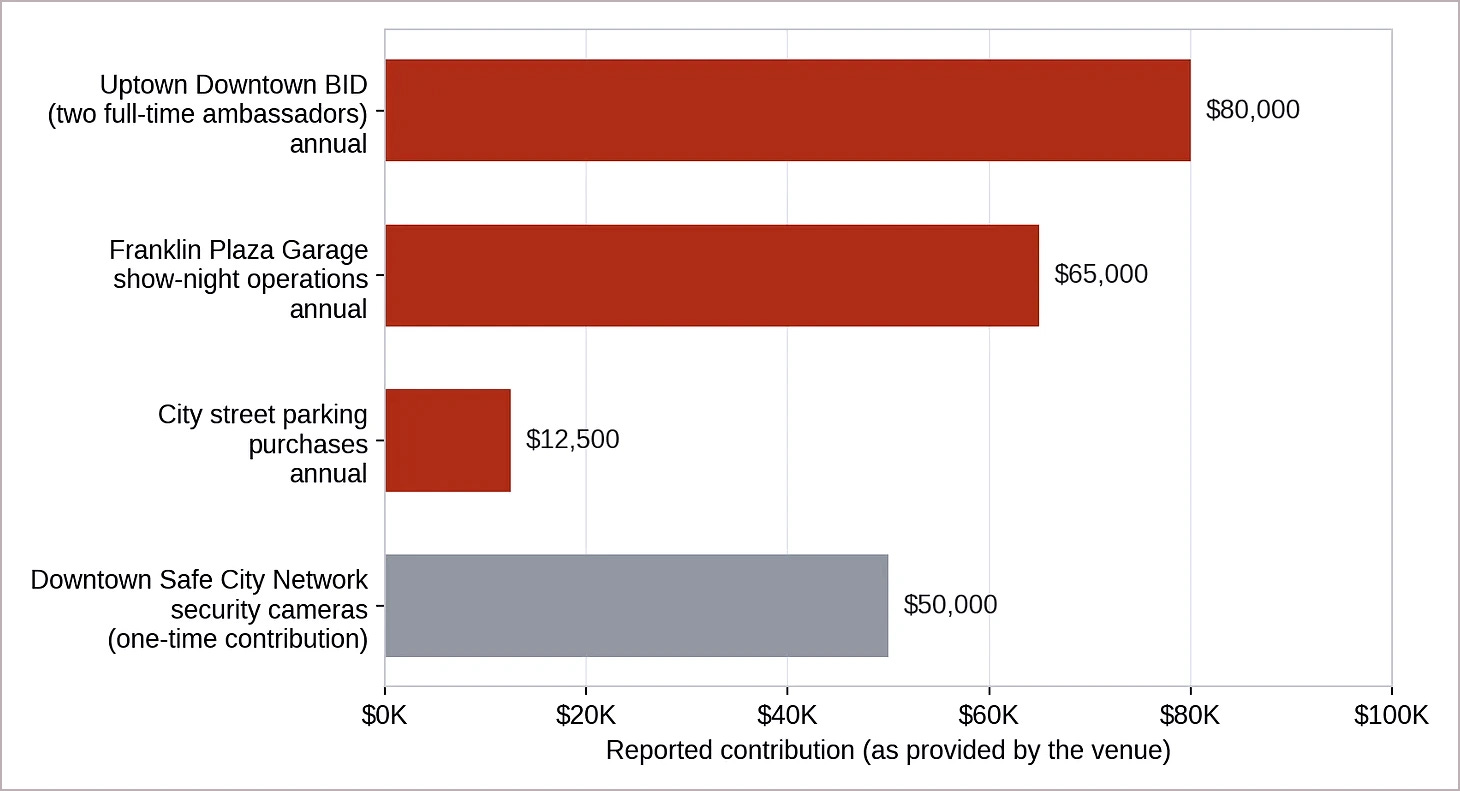
The venue reports paying more than $150,000 a year into neighborhood safety and operations. These costs include $80,000 to subsidize two full-time Uptown/Downtown street ambassadors, $65,000 to keep the Franklin Plaza Garage open on show nights, and $12,500 in city parking purchases — plus a $50,000 contribution of security cameras to the Downtown Safe City Network.
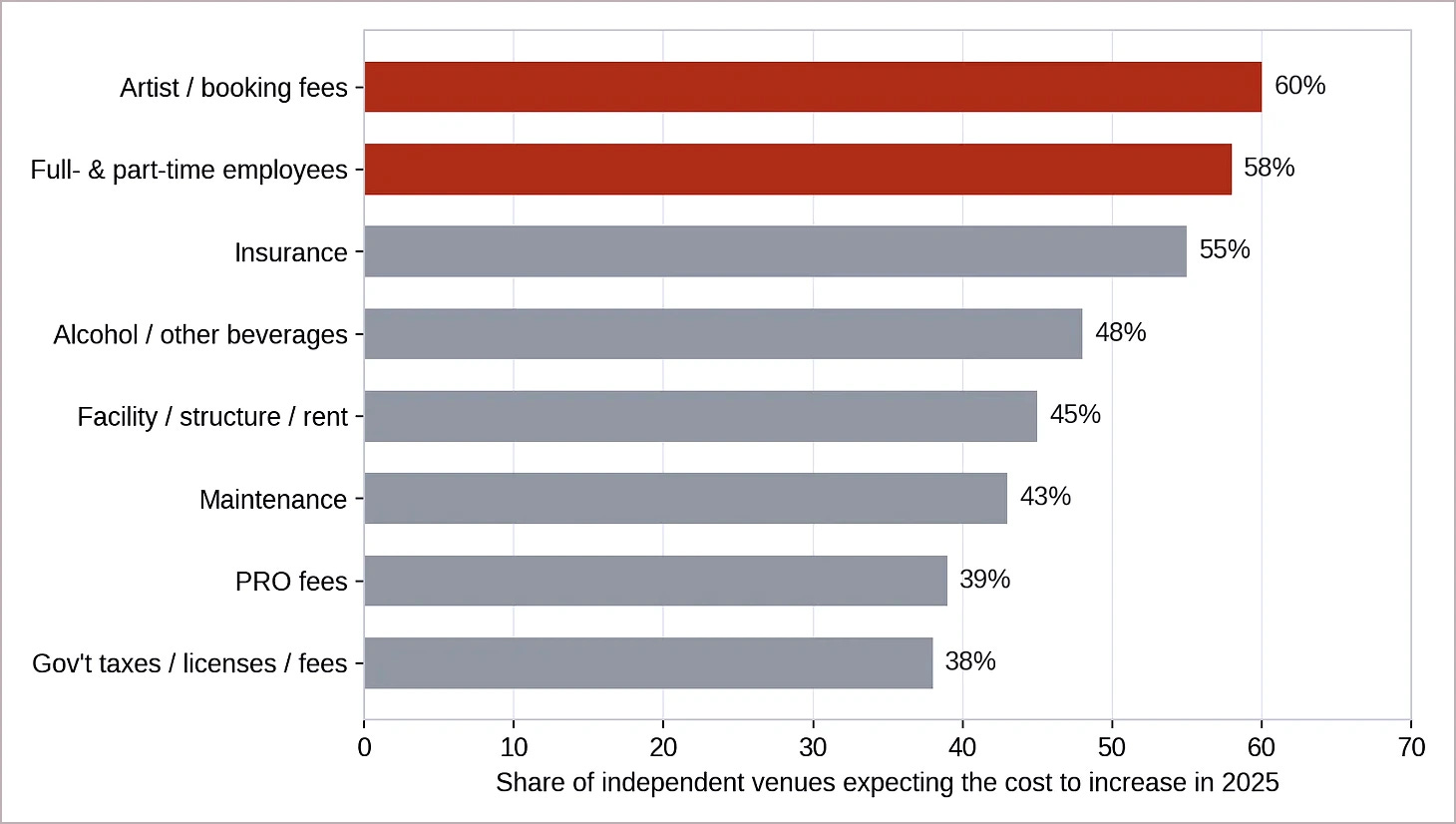
Independent venues across the nation are under rising cost pressure. Per the National Independent Venue Association’s (NIVA’s) 2025 State of Live study, 64% of independent stages were unprofitable in 2024, and a majority expect artist fees (60%) and staffing costs (58%) to rise further.4
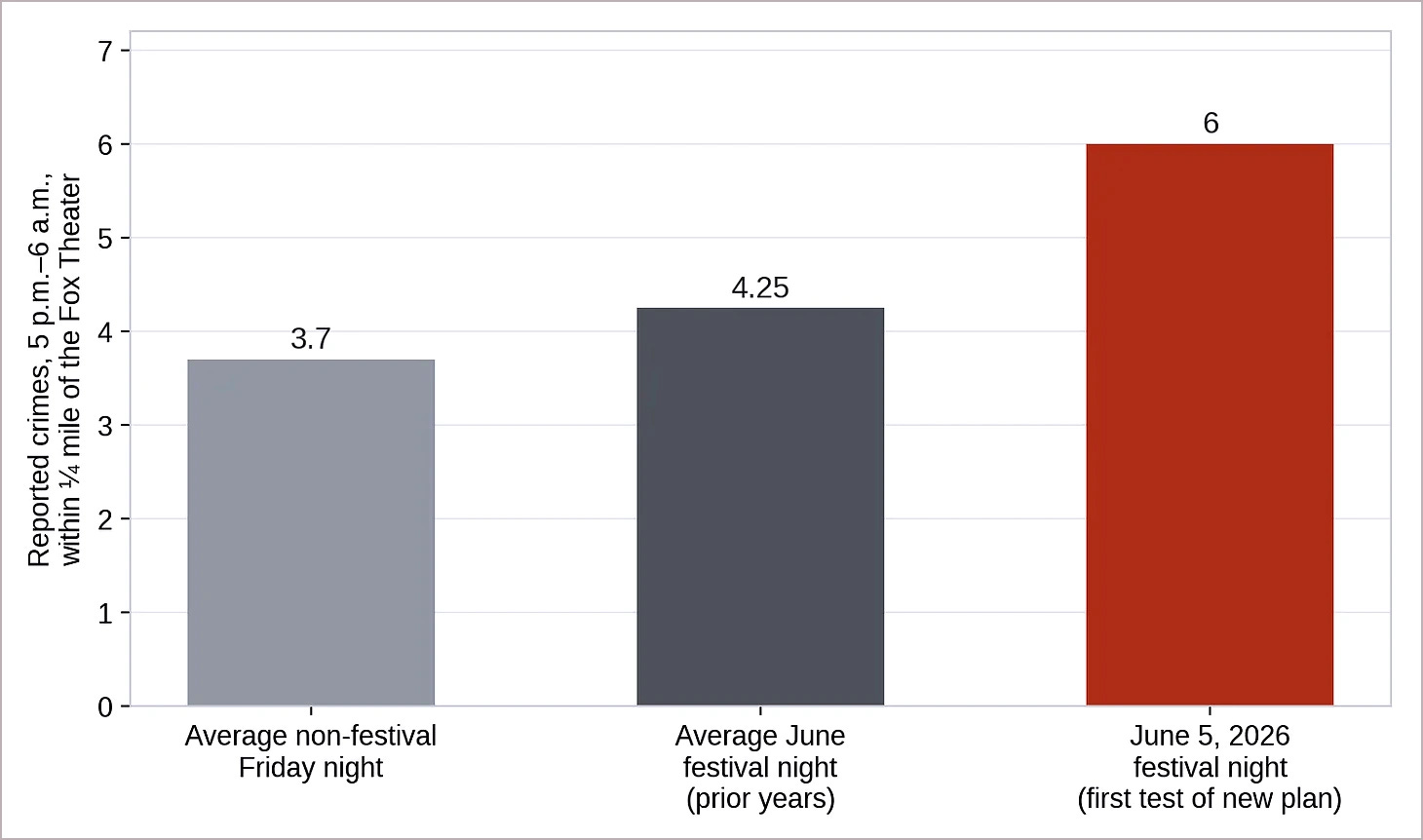
The city’s new late-night safety plan showed partial success in its first test. As Oakland Report reported this month, late-night crime near the Fox on the June 5 festival night was still roughly 60% above a typical non-festival Friday — but the street takeovers in front of the theater were noticeably reduced.5
The Fox anchored Uptown’s revival — and catalyzed Oakland’s live music ecosystem
The Fox Theater opened in 1928 as one of Oakland’s grand movie palaces. It went dark in 1966, and remained shuttered for more than four decades.
Its restoration and reopening in 2009 became a centerpiece of then-mayor Jerry Brown’s strategy to revive Uptown Oakland. The city’s redevelopment agency, the nonprofit Friends of the Oakland Fox, and developer Phil Tagami assembled a $75 million restoration, in a shared-use plan that placed the Oakland School for the Arts (OSA), the charter school Brown founded, in the building.6
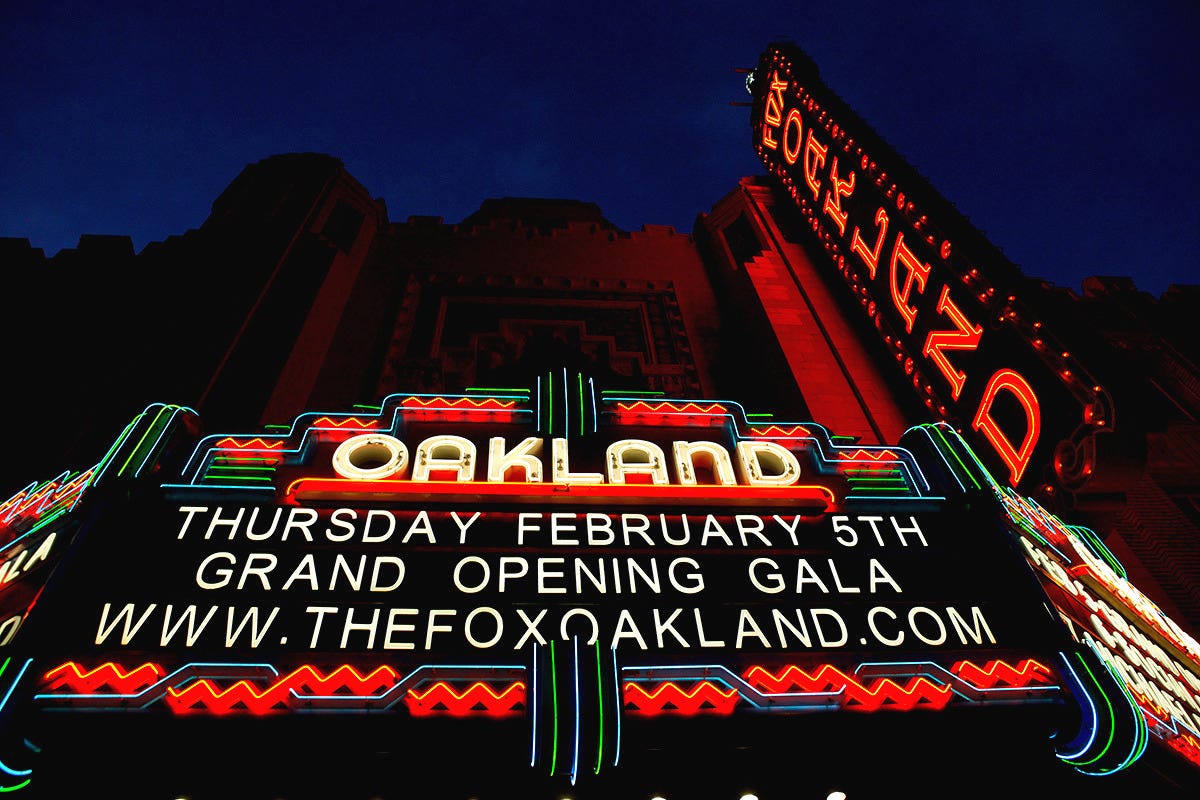
The theater reopened on Feb. 5, 2009 as a 2,800-seat concert hall operated by Another Planet Entertainment (APE), and was explicitly envisioned as the hub of an Uptown Arts and Entertainment District.7
The move appears to have paid off. By 2015, the district manager of Oakland’s Uptown and Downtown community benefit districts credited the Fox’s reopening with helping drive roughly 200 ground-floor storefront openings in the core downtown area, many clustering around the arts and entertainment district.
The venue’s own figures tell a similar story at closer range. When the Fox opened, it says, only three night-time businesses operated in the immediate neighborhood; within five years, more than 50 bars and restaurants had opened within a few blocks — many of which now base their staffing on the Fox’s event calendar.
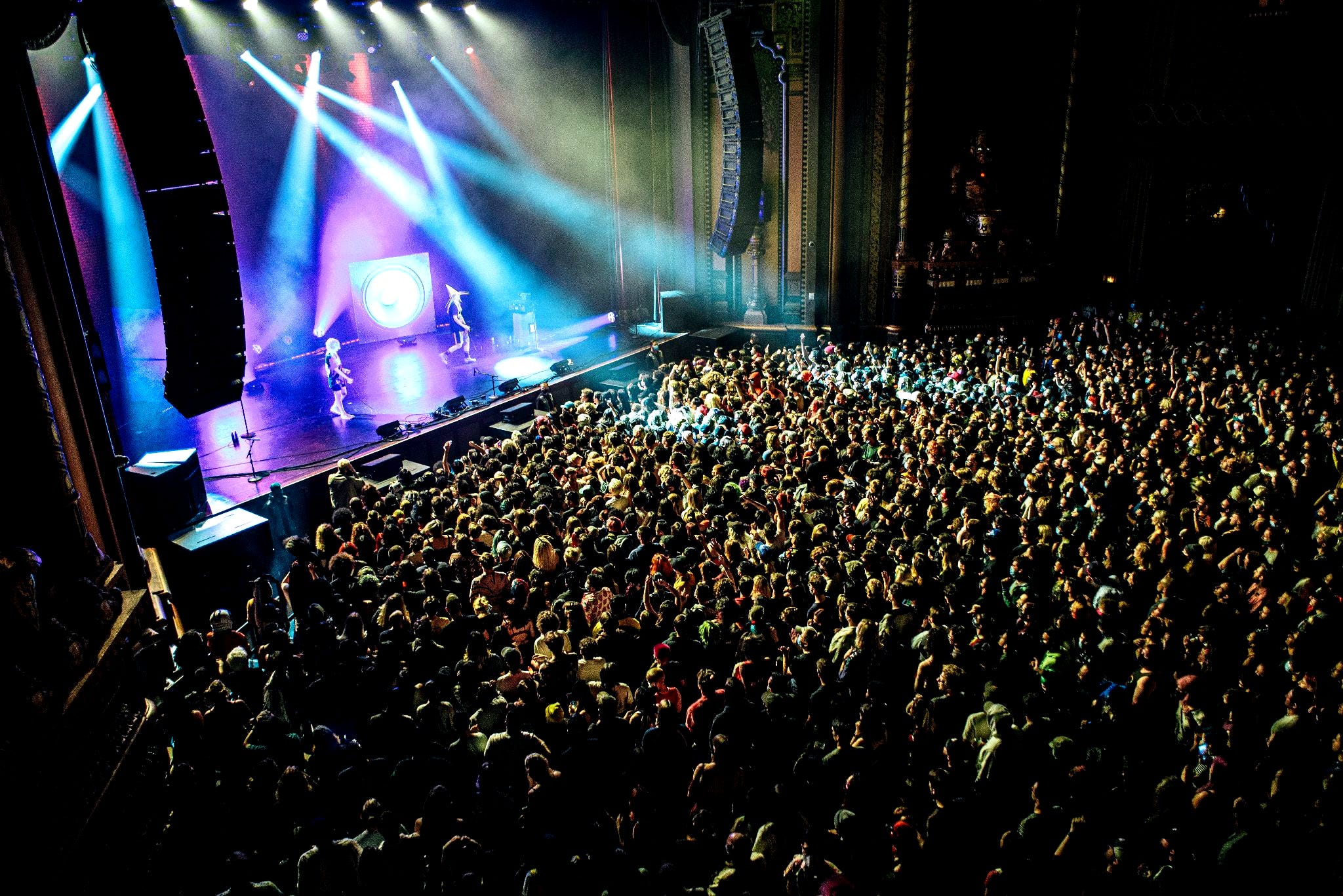
Since 2009, the Fox Theater has hosted world-famous performers from Bob Dylan, Paul Simon, and Van Morrison to East Bay heroes Green Day and Metallica to current stars like Lorde and Billie Eilish — along with then-president Barack Obama, who spoke at the venue during his 2012 re-election campaign.8
On October 2 of this year — a First Friday festival night — The Daily Show alumni Hasan Minhaj and Ronny Chieng will perform two shows at the Fox Theater on their “Hasan Hates Ronny” tour, which the venue says the comedians plan to film for an upcoming special.9
The venue also functions as civic infrastructure. It shares its building with OSA, donates $25,000 a year to the school, hosts its spring concerts and graduations, and runs an internship program with its students, according to the venue. It has hosted community events for organizations including Oakland Promise, Children’s Hospital Oakland, and the East Oakland Black Culture Zone.
The Fox Theater generates an estimated $17 million per year in economic benefit to Uptown Oakland
The scale of the Fox’s operation translates into significant economic activity for the surrounding district.
According to figures provided by the venue, the Fox employs more than 100 people on any given show night, including security, bar staff, ushers, union stagehands (IATSE Local 107), engineers, and production and janitorial staff — and its operational costs run well over $50,000 per show.
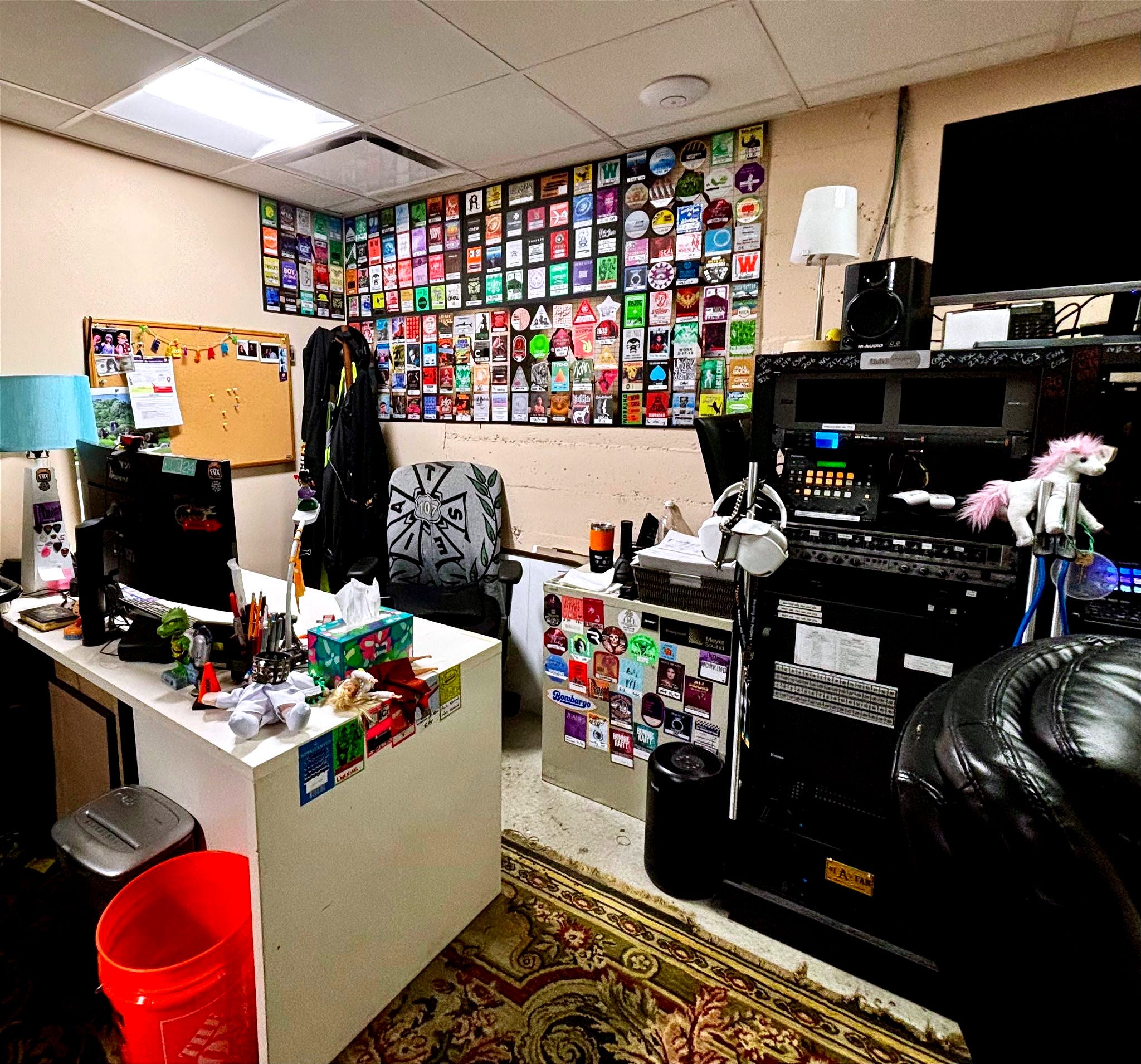
Since reopening after the pandemic, the venue says it has spent over $2 million on building overhead and $1.8 million on utilities. Since its grand reopening in 2009, it has spent more than $2.5 million upgrading its lighting and audio systems three times to remain competitive with other regional concert halls.
WE RELY ON YOU
If you like our work, please donate to Oakland Report. We are a 501(c)(3) nonprofit organization that relies on voluntary donations from readers like you. Your contribution in any amount helps us to continue to produce accurate, well-researched, deep-dive articles like this one.
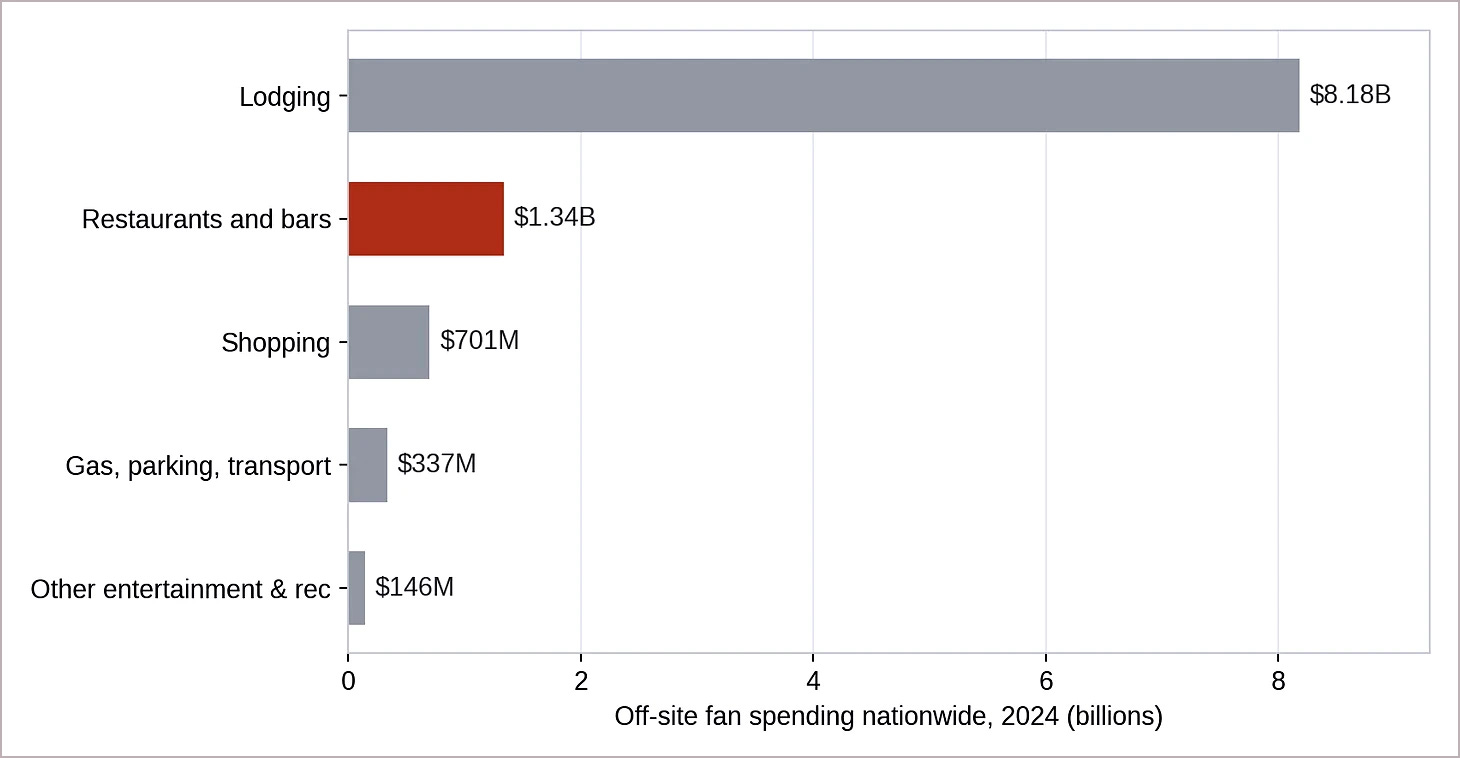
National data suggest how that economic investment ripples outward to the city’s benefit. NIVA’s 2025 State of Live study — the first national economic analysis of the independent live entertainment sector — found that fan spending tied to independent venues generated $10.62 billion in off-site spending nationwide in 2024, including $1.34 billion at restaurants and bars, and that the sector generated an estimated $3.14 billion in local tax revenue.
Applying NIVA’s Music Venue Economic Impact Calculator, a modeling tool built by a Colorado State University researcher, a venue of the Fox Theater’s size generates an estimated $17 million per year in regional economic impact — roughly $57 per attendee across 300,000 annual visitors.10
These modeled figures represent total economic activity — including the venue’s own operations and multiplier effects — not simply cash spent at neighboring businesses. While they are an estimate, not an audit of economic impact, they offer insight into the value of the Fox Theater to Oakland’s vibrancy and success.
Even discounted heavily, the direction of the numbers is consistent with what the surrounding district reports anecdotally: bars and restaurants near the Fox Theater staff up on show nights, and prior to the pandemic, the venue says, most of its patrons visited neighborhood restaurants before or after shows.
The Fox Theater pays over $157,000 per year into the Uptown district’s safety and operations
Beyond its programming, the Fox reports directly funding the district’s public-safety and operations infrastructure:
$80,000 per year to the Uptown Downtown Business Improvement District to subsidize two full-time community ambassadors, who provide hospitality, safety escorts, and street beautification;
$65,000 per year to help keep the Franklin Plaza Garage open on show nights;
$12,500 per year purchasing street parking from the City of Oakland; and
$50,000 contribution of security cameras to the Downtown Safe City Network, the public-private camera system that feeds a central monitoring hub.
Independent venues like the Fox Theater face rising costs — with little cushion
The Fox’s investments come as independent venues nationally operate on thin or negative margins.
NIVA’s State of Live study found that 64% of independent stages were not profitable in 2024, that 31% of all venue expenses went directly to artist and booking fees, and that a majority of venues expected their largest costs to keep climbing in 2025 — led by artist fees (60% of venues) and staffing (58%), with insurance, beverages, rent, maintenance, and government taxes and fees close behind.
The Fox’s own recent history illustrates the fragility. The venue was closed for 18 months during the pandemic — from March 2020 to September 2021 — with zero show income. The venue says the city provided no rent relief during the closure, though a federal grant and APE’s decision to retain its full-time staff allowed it to restart quickly after pandemic restrictions were finally lifted.
By the venue’s account, its strongest year was 2019, at roughly 130 shows — a level of activity it is working to rebuild as concerns about late-night safety in the district have weighed on attendance in recent years.
It is reasonable to consider the possibility that a venue operating in this cost environment has limited capacity to absorb further losses from a deteriorating neighborhood reputation — which may explain why the Fox and its neighbors have pressed the city so publicly for a sustained response to the late-night chaos and overall crime in the neighborhood.
The city’s response: a new safety plan, and a first partial success
On June 4, days before last month’s First Fridays festival, the city announced a coordinated set of community safety and operations improvements for the Downtown, Uptown, and Koreatown-Northgate neighborhoods on Friday and Saturday evenings.11
The city’s new safety plan included enhanced Oakland Police Department staffing into the late-night hours, reinforced by the California Highway Patrol and Alameda County Sheriff’s Office; violence-prevention and MACRO (“Mobile Assistance Community Responders of Oakland”) patrols; code and vendor enforcement; post-event street cleaning; and road closures with ‘no parking’ zones on Broadway and Telegraph Avenue from 15th to 20th Streets, with four intersections closed to through traffic.
“Violence is not an option in Oakland,” mayor Barbara Lee said in announcing the effort. (Oakland currently has the highest violent crime rate in the state.)12
Council member Carroll Fife framed the challenge as broader than one event: “We need public safety infrastructure every single night of the week.”1314 (Council member Fife has strongly advocated and voted to ‘defund’ the Oakland Police Department.)15
As Oakland Report reported in the second installment of this series, the safety plan’s first test on June 5 produced mixed results. Reported crime within a quarter-mile of the Fox from 5 p.m. to 6 a.m. still spiked — six incidents, roughly 60% above the average non-festival Friday, and slightly above the average for June festival nights — and the incidents again skewed violent.
But the street takeovers in front of the theater were noticeably reduced: by eyewitness estimates, the night saw crowds of roughly 1,000 people rather than the typical 3,000, with vehicles prevented from blocking the street out front of the Fox.
Leaders at the Fox Theater told Oakland Report they were encouraged by the June effort — the most visible and coordinated city response they have seen in many years — while emphasizing that what the district needs is not a one-time show of force but a clear plan, communicated publicly and executed consistently.
The city’s plan, notably, defines no benchmarks or metrics for measuring its own success, and no set duration beyond individual festival dates. Whether the June 5 improvement becomes a trend, the data suggests, will depend on that consistency.
Caveats and limitations
Several limits apply to the figures in this analysis.
The Fox’s attendance, employment, spending, and contribution figures were provided by the venue and its operator, Another Planet Entertainment, and could not be independently audited; we present them as the venue’s reported figures.
NIVA is a trade association whose State of Live study — built from member surveys and IMPLAN (“Impact Analysis for Planning”) economic modeling — exists in part to support advocacy for the sector; NIVA describes its estimates as conservative, but they are estimates.
Modeled economic impact figures measure total economic activity, not just money spent at neighboring businesses.
As we have emphasized throughout this series, correlation is not causation: a single festival night’s crime data does not establish whether the city’s safety plan is working, and the Fox Theater’s role in Uptown’s revival, while widely credited, cannot be isolated from the broader redevelopment investments made in the district over the same period.
Other considerations and counterpoints
We present the strongest opposing considerations, largely without further rebuttal, for readers to consider:
First Fridays organizers maintain that the late-night crime and street takeovers are separate from the official festival, which is a family-oriented event held in Koreatown-Northgate, a few blocks from Uptown, and which ends in the early evening. Organizers have argued — contrary to evidence — that media coverage unfairly conflates the two, and that the late-night crowds are “a City of Oakland problem” requiring citywide strategies rather than a festival problem.16
The city’s own plan asserts that the festivals themselves are “safe, successful, and invaluable,” attributing community concerns to “unrelated incidents” occurring hours after the official events end.
The Fox Theater has a direct commercial stake in the city’s enforcement posture. Its operator, APE, is one of the largest independent concert promoters in Northern California, and figures the venue provides in support of greater city action serve its business interests as well as the city’s.
The city’s June effort produced real, observable improvement in the street conditions in front of the theater on its first attempt — an outcome that, whatever its limits, is undeniably better news than had the takeovers continued unabated.
The Fox Theater is an economic anchor worth protecting — if the city’s follow-through holds
The Fox Theater is, by the available data and by wide consensus, the economic and cultural anchor of Oakland’s Uptown arts and entertainment district — a restored landmark that draws more than 300,000 people a year, sustains a neighborhood ecosystem of bars and restaurants, and pays directly into the Uptown district’s safety and operations.
That anchor sits at the center of a persistent late-night public safety problem that the city has only just begun to seriously address, with a first effort that reduced the street takeovers but not the crime.
The venue’s manager put the stakes in terms any Oaklander can recognize: the Fox Theater is the city’s greeting card. Whether the city treats the district that way — with the consistency, coordination, and communication its businesses have asked for — is the question the rest of this summer’s festivals will answer.
Read these related articles:


ABOUT THE AUTHOR
Eric Urbach is a lifelong Bay Area resident and recent graduate of University of California, Berkeley. He is inspired by journalism’s ability to connect communities and shine a light on the powerful.
Eric has covered a range of topics including technology, telecom and AI policy in the halls of the U.S. Congress; as well as city government, local business, and arts and culture for the San Francisco Examiner, Bay City News, Broadband Breakfast and The Daily Californian.
Prior to his work as a reporter, Eric worked in the music industry as a signed touring musician, recording and live sound engineer, and quality control and public relations for a vinyl record manufacturing company, among other roles.
Eric continues to build his reporting skills by participating in Oakland Report’s inaugural summer internship program before beginning his graduate studies at the UC Berkeley School of Journalism this fall.

BECOME A SUPPORTING MEMBER
Oakland Report is an experiment in a new form of media. If you value our nonprofit work, please donate to become a supporting member. Your contribution in any amount helps us support our paid summer internship program and continue to produce articles like this one.
Reinhart, Sean S. “Late-night crime spikes 44% on First Fridays. The city says it has a new plan to curb it.” Oakland Report, Jun. 5, 2026. https://www.oaklandreport.org/p/late-night-crime-spikes-on-first-fridays
Another Planet Entertainment contributors. “Venue info.” Fox Theater website, accessed Jul. 12, 2026. https://thefoxoakland.com/venue-info/
Caro, Mark. "Tale of two Uptowns: Chicago and Oakland, Calif." Chicago Tribune, Aug. 9, 2015. https://www.chicagotribune.com/2015/08/09/tale-of-two-uptowns-chicago-and-oakland-calif/
National Independent Venue Association contributors. “The state of live: the first economic research study of the independent live sector.” NIVA / TEConomy Partners, Jun. 23, 2025. https://www.nivassoc.org/s/2025-NIVA-State-of-Live-Report.pdf
Reinhart, Sean S. "Oakland's new First Fridays safety plan began last month. Late-night crime still spiked." Oakland Report, Jul. 3, 2026. https://www.oaklandreport.org/p/first-fridays-safety-plan-june-2026-crime-data
Petines, Vianca. “The Fox Theater – Oakland’s iconic live entertainment venue – celebrates 15th anniversary of reopening this February.” The LA Note Magazine, Feb. 29, 2024. https://thelanote.com/the-fox-theater-oaklands-iconic-live-entertainment-venue-celebrates-15th-anniversary-of-reopening-this-february/
Building Design + Construction contributors. “Historic Fox Oakland Theater, designed by Weeks and Day, reopens Feb. 5, 2009, after having been closed for 40 years.” Building Design + Construction, Feb. 3, 2009. https://www.bdcnetwork.com/home/press-release/55169204/historic-fox-oakland-theater-designed-by-weeks-and-day-reopens-feb-5-2009-after-having-been-closed-for-40-years
Wikipedia contributors. “Fox Oakland Theater.” Wikipedia, the free encyclopedia. accessed Jul. 12, 2026. https://en.wikipedia.org/wiki/Fox_Oakland_Theatre
Another Planet Entertainment contributors. “Hasan Hates Ronny | Ronny Hates Hasan.” Fox Theater event listing, accessed Jul. 12, 2026. https://thefoxoakland.com/events/hasan-minhaj-ronny-chieng-261002
Seman, Michael. “Music venue economic impact calculator.” NIVA, accessed Jul. 12, 2026. https://www.nivassoc.org/economic-impact
City of Oakland. “Oakland increases safety enhancements in Downtown and Uptown areas.” City of Oakland press release, Jun. 4, 2026. https://www.oaklandca.gov/News-Releases/Oakland-Increases-Safety-Enhancements-in-Downtown-and-Uptown-Areas
Segura, Daniela. “Report ranks California’s 10 most dangerous cities. See the list.” The Desert Sun / USA Today, Jul. 7, 2026. https://www.desertsun.com/story/news/nation/california/2026/07/07/these-are-californias-10-most-dangerous-cities-according-to-report/90836880007/
KTVU staff. "Oakland leaders discuss future of 'First Fridays.'" KTVU, Jun. 4, 2026. https://www.ktvu.com/news/oakland-leaders-discuss-future-first-fridays
Jones, Velena. "Oakland boosts security ahead of First Fridays street festival." NBC Bay Area, Jun. 5, 2026. https://www.nbcbayarea.com/news/local/oakland-first-friday-security-boost/4094803/
CBS San Francisco contributors. “Oakland city council votes to defund police, stripping more than $17M from department budget.” CBS News, Jun. 24, 2021. https://www.cbsnews.com/sanfrancisco/news/oakland-city-council-votes-defund-police-stripping-17-million-department-budget/
Romero, Roselyn. “False media narratives threaten Oakland’s First Fridays, say organizers.” The Oaklandside, Jun. 18, 2026. https://oaklandside.org/2026/06/18/oakland-first-fridays-safety-narratives-violence/
I have a great idea. How about enforcing laws? Make it safe, make it less disturbing to go outside at night in Oakland? No, that might mean arresting POC. We can't have that.
Nice article. I’m speaking as a nerdy urbanist and not in any official capacity. I will continue to advocate for closing Telegraph to autos from Broadway to TLB Way. Pedestrianize the entire area.