


A triumph of community self-reliance
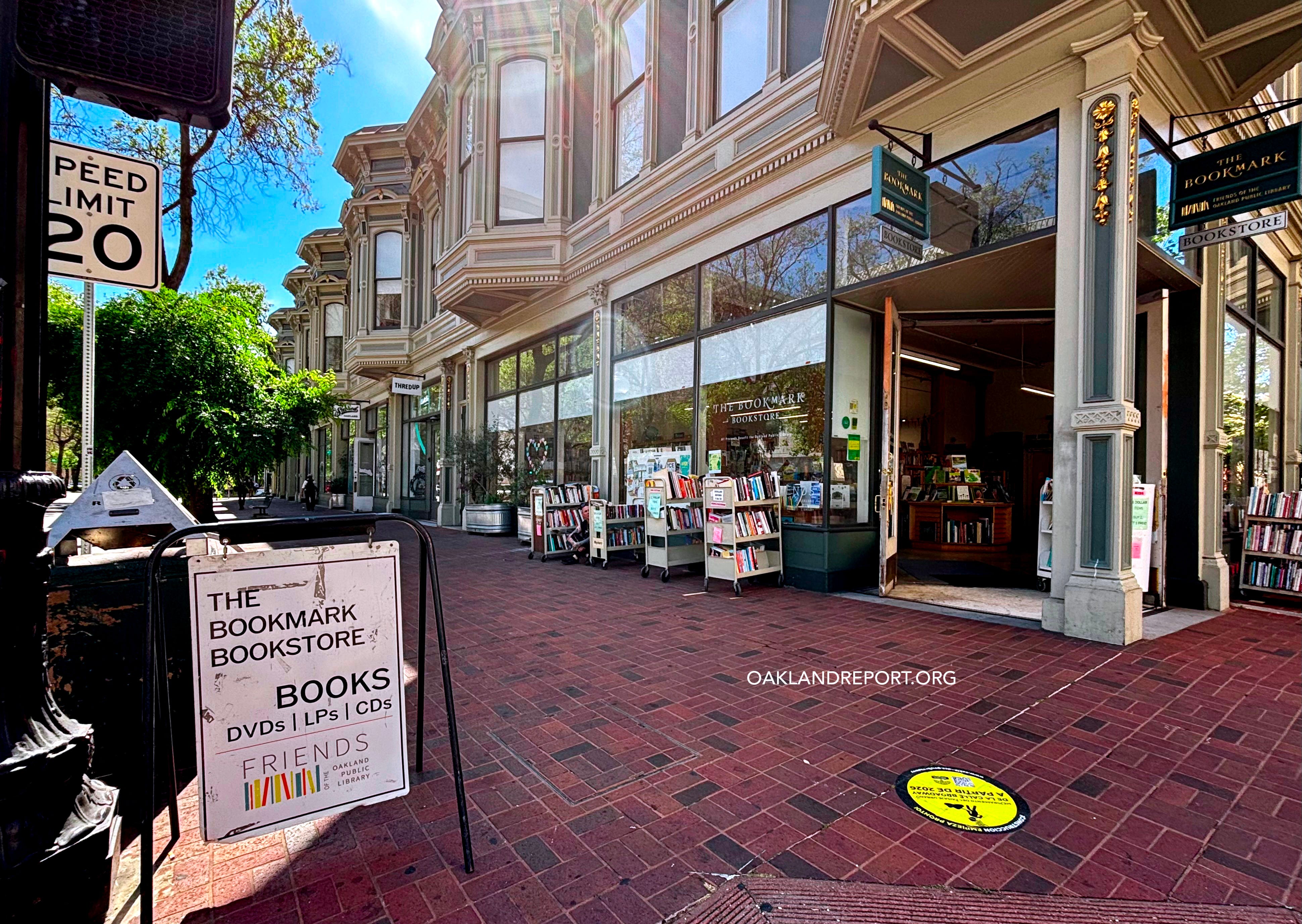
Located at 933 Broadway in the Old Oakland district, The Bookmark bookstore stands as a symbol of Oakland’s beauty, history, and community resilience.
In a landscape often dominated by headlines of government malfeasance, incompetence and service gaps, The Bookmark is an example of the power of people and the private sector to create a sophisticated synthesis of historic preservation and modern civic action despite the chronic dysfunction of Oakland’s government.
The Bookmark is not merely a feel-good story of a successful nonprofit and retail cornerstone of Oakland’s most cherished historic district — it is a triumph of community-driven self-reliance over the systemic failures of municipal fiscal management: a community engine that converts private action into public power, and brings a private solution to a self-inflicted public funding gap.
A powerful engine of volunteerism
To understand the success of The Bookmark is to behold a machine of volunteer efficiency that thrives where Oakland’s local government routinely falters.
The bookstore’s enduring success is built on a “volunteer-first” labor model, a crucial factor in its ability to maintain the low-overhead, high-impact operations required in the modern nonprofit sector.1 Its retail operation is powered by a corps of over 100 dedicated volunteers, directed by three professional staff members: full-time manager Erin Rivero and two part-time staff. Together, they process an inventory exceeding 17,000 items ranging from rare collectibles to affordable paperbacks.2
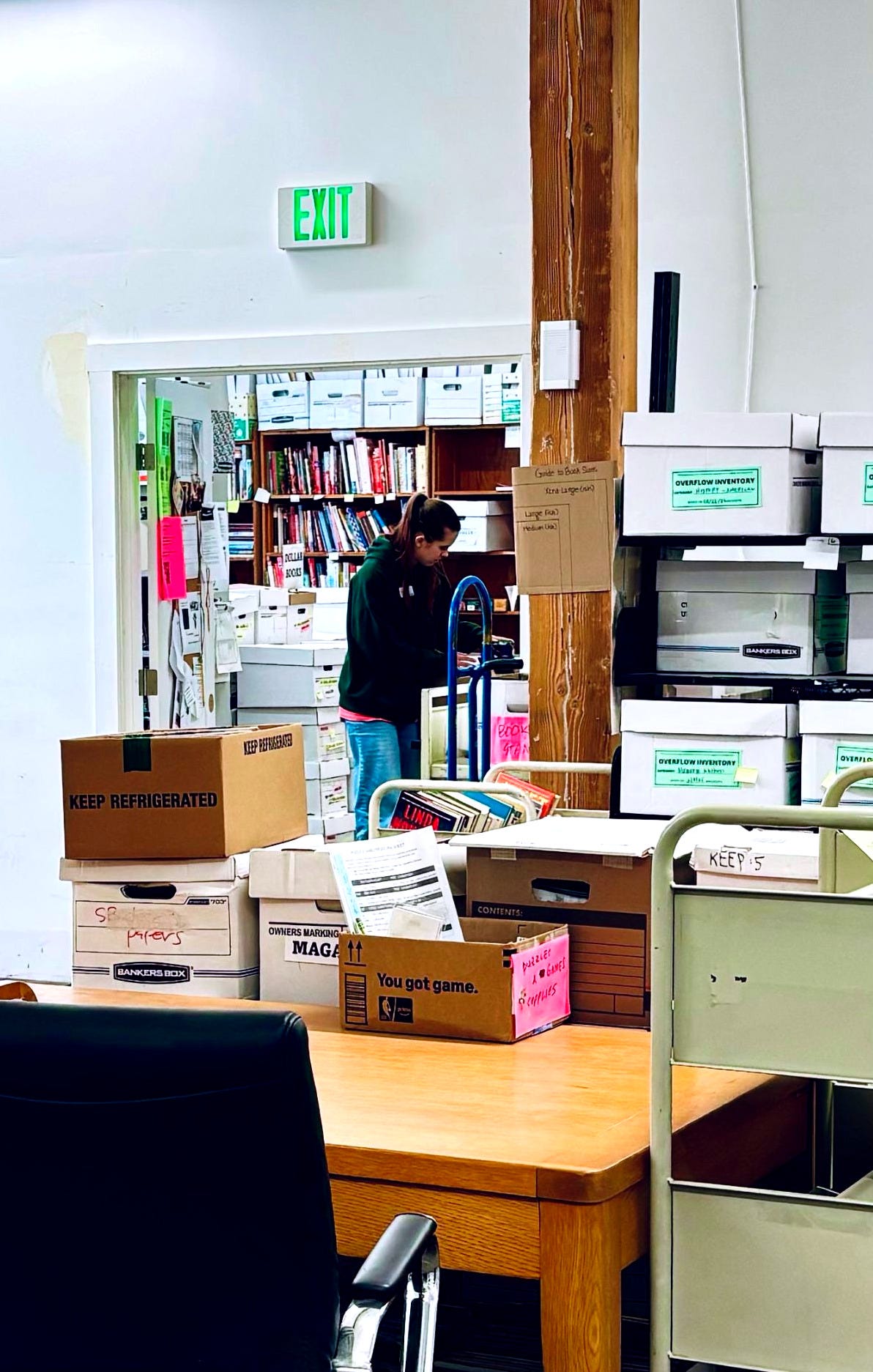
The Bookmark’s volunteer-driven model allows the bookstore to bypass many of the traditional burdens of a commercial business by leveraging the community’s passion for books, reading and rewarding retail experiences to generate a diversified and reliable revenue stream. By minimizing personnel costs, the percentage of revenue directed to supporting Oakland’s public libraries is maximized to impressive results.
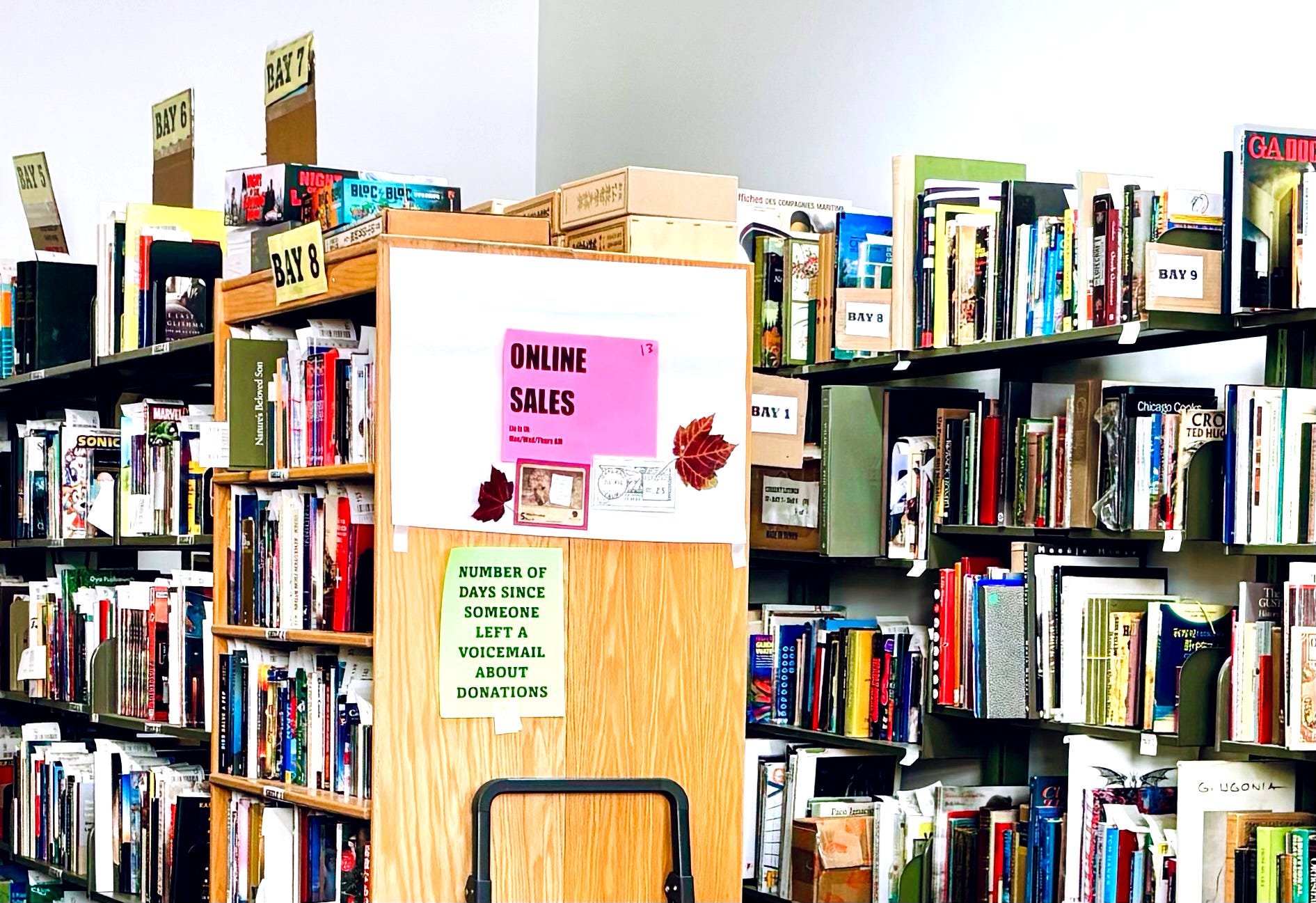
The efficiency and effectiveness of this model is evident in The Bookmark’s multi-channel approach to sales. Although foot traffic and retail floor sales anchor the Broadway storefront, the organization also leverages online sales through eBay, Amazon, Bookshop.org and other platforms. Approximately half of its sales revenue is generated this way, and the proceeds can be substantial — for example, the sale of a rare set of The Wizard of Oz classic book series online generated as much revenue as a week of retail floor sales.
The lifecycle of a donated book
The path from donated books to financial support for Oakland’s public libraries follows an orderly operational flow managed by the store’s parent nonprofit, Friends of Oakland Public Library (FOPL):
Arrival at the 10th Street shop: Donors deliver gently used books and related materials to The Bookmark on Fridays and Saturdays between 12:00 p.m. and 4:00 p.m. The operation benefits from high visibility in Oakland’s 18 public library locations, which redirect offers of book donations to The Bookmark.
The sorting process: Volunteers evaluate and sort the donated materials under the supervision of professional staff. Items compromised by mold or structural damage are culled, while viable media are evaluated for market demand and condition.
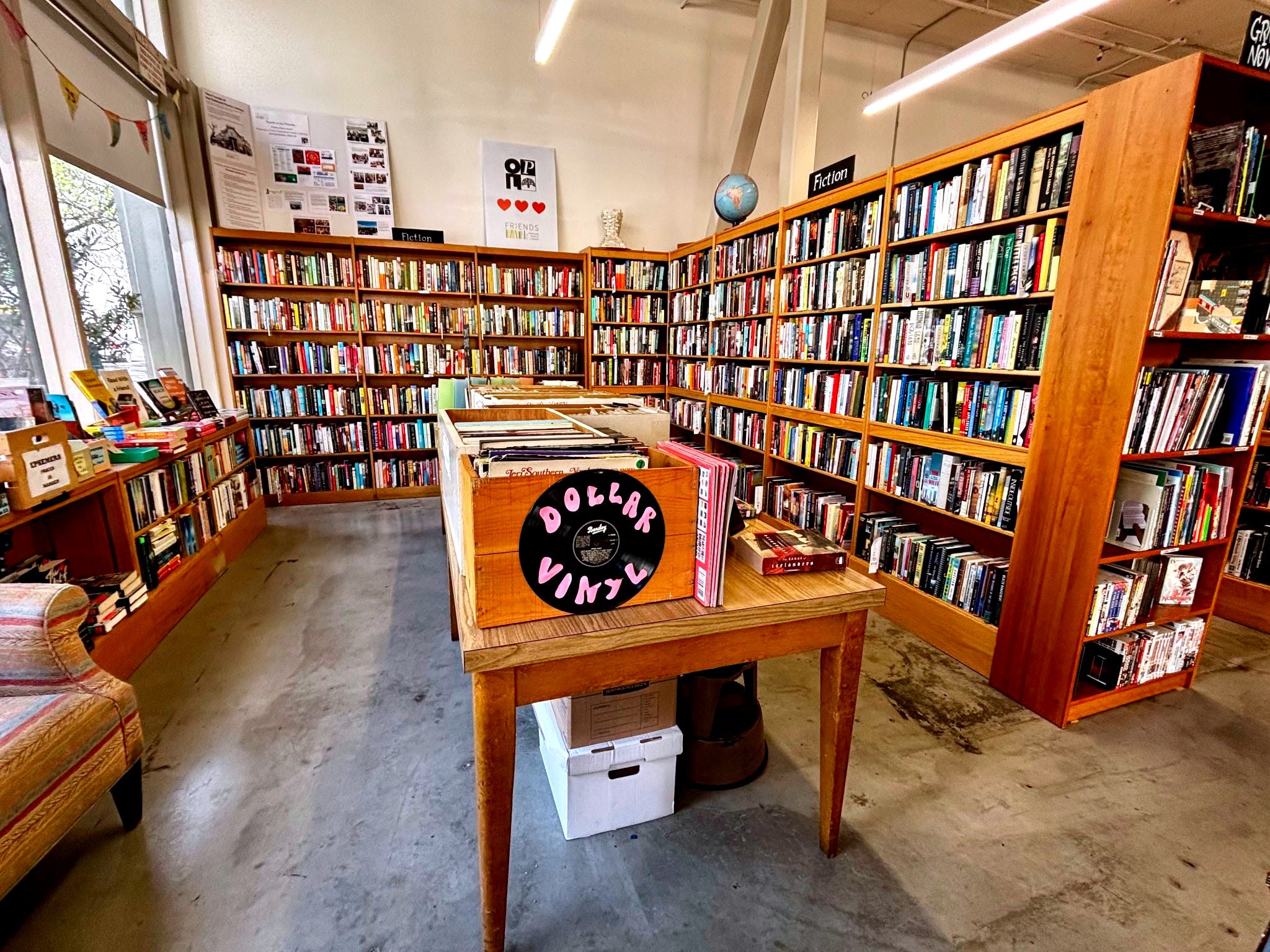
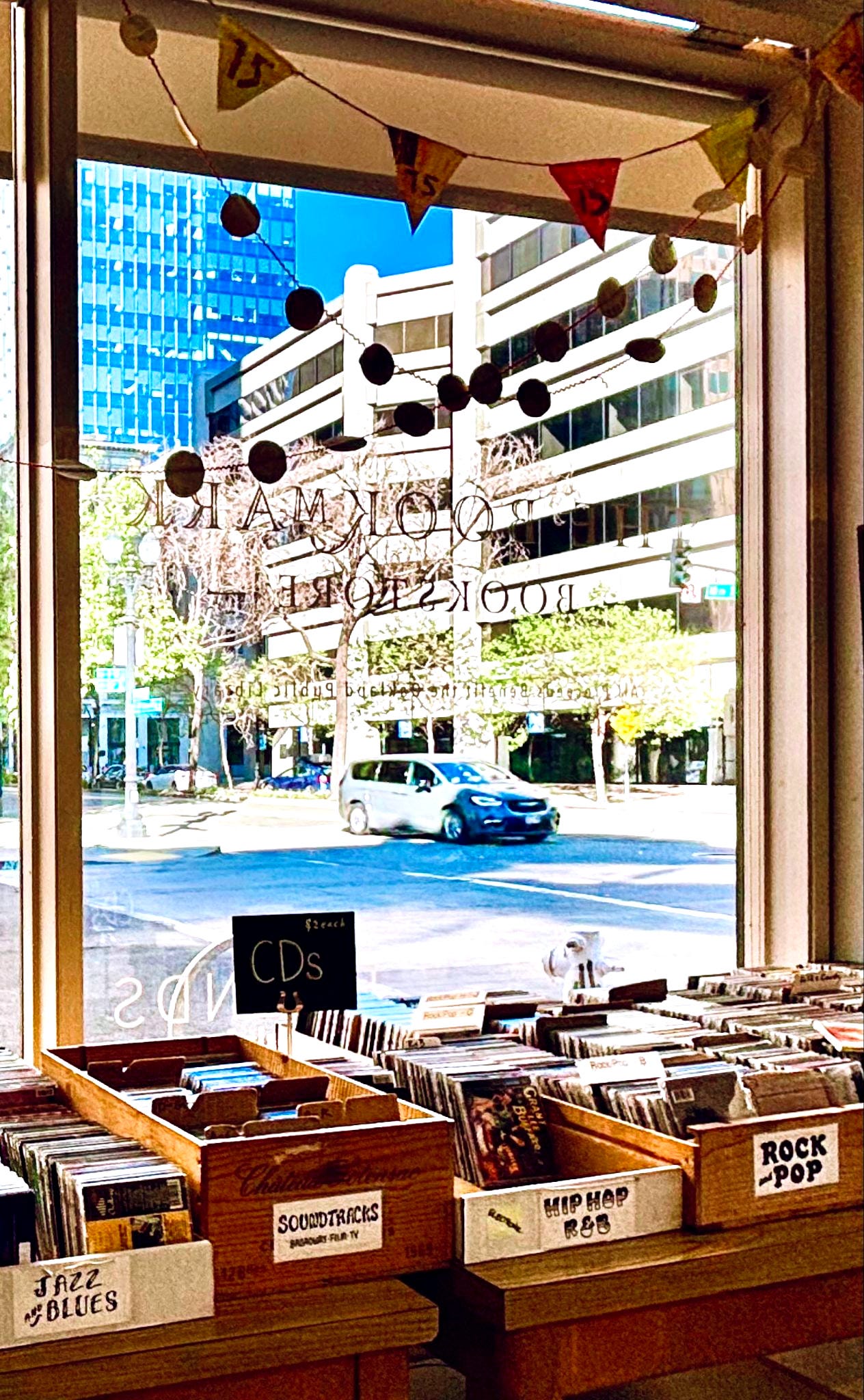
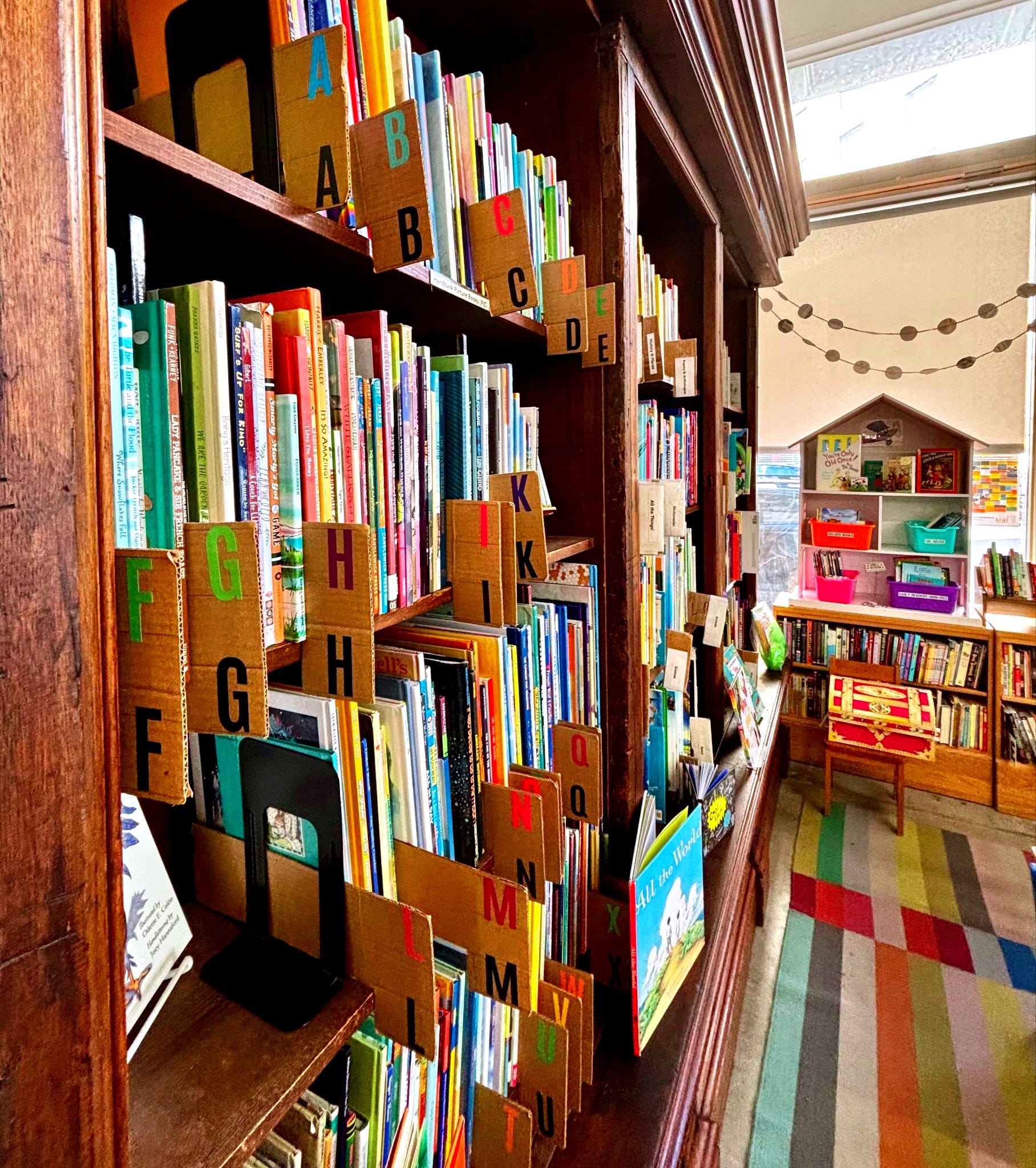
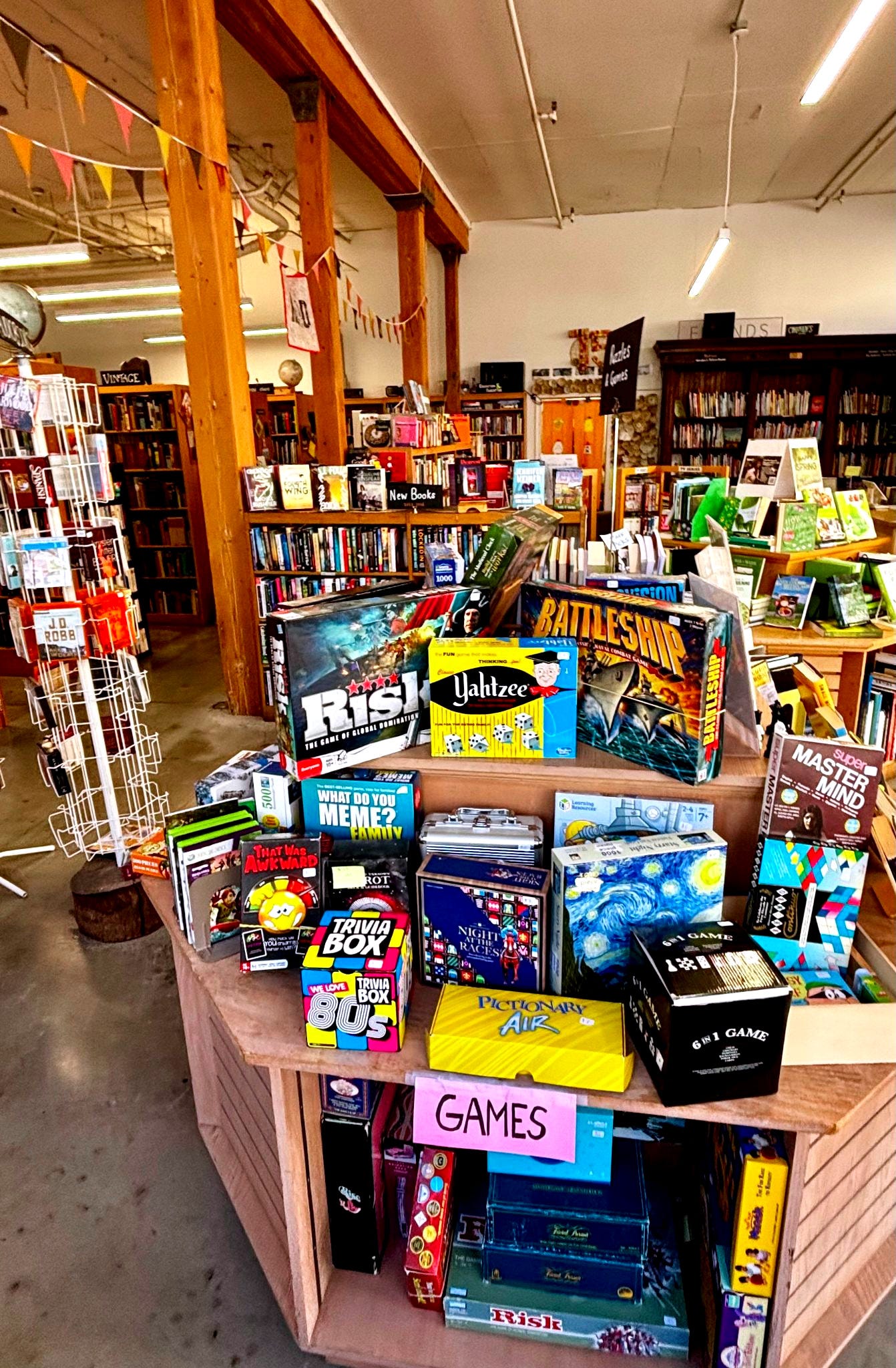
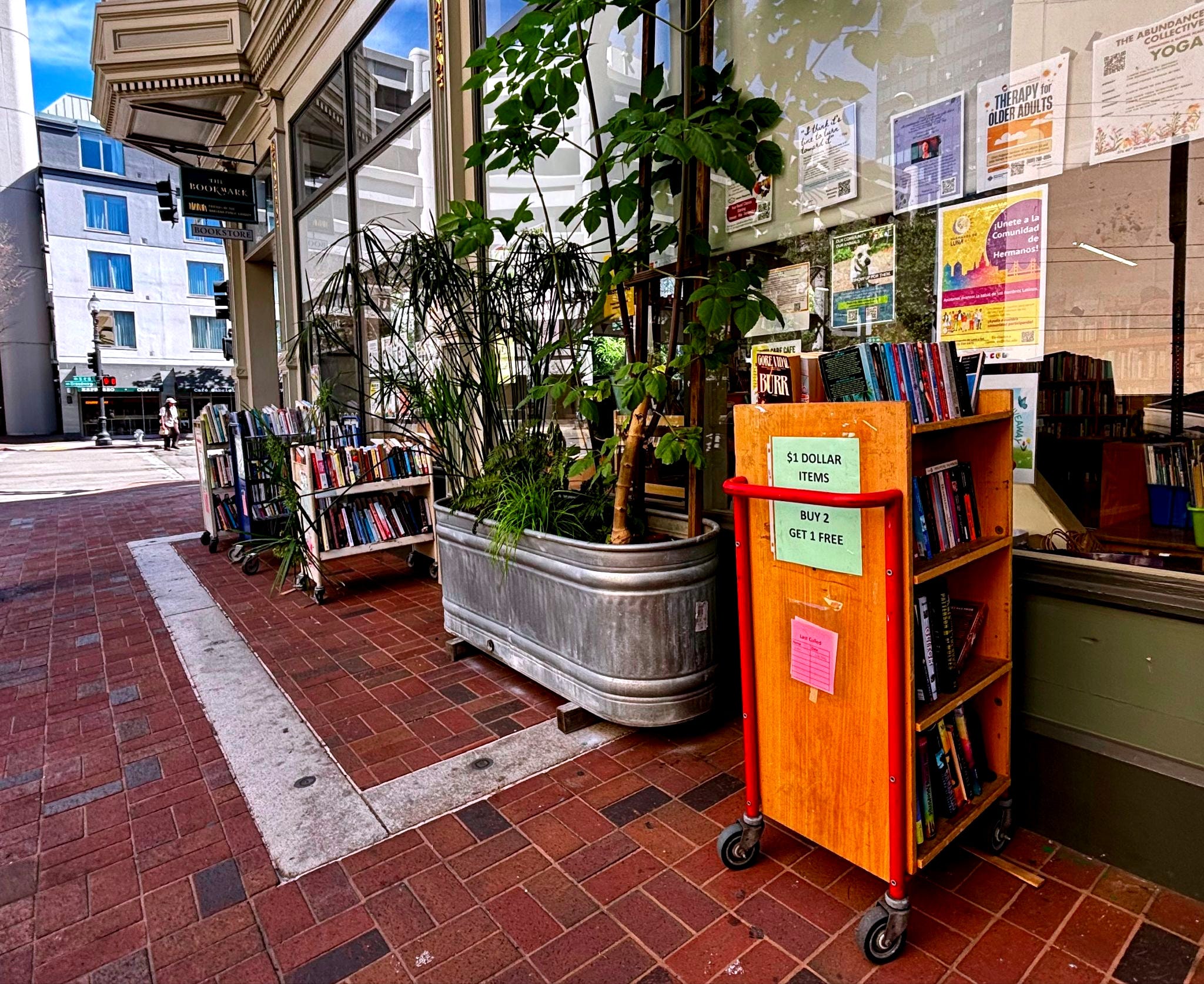
Curation and retail displays: High-quality, affordable finds — typically priced between $3 and $7 — are deployed to the sales floor at 933 Broadway. The retail space is clean, well-organized, and quirky like other popular independent bookstores, featuring a wide variety of items to engage shoppers through curated displays of books, DVDs, vinyl records, board games, puzzles, and related media indicated by handmade signs.
Online sales: Rare or valuable items — such as an 1878 History of San Francisco — are listed on digital marketplaces to extract maximum resale value.
Affordability and “upcycling”: By maintaining an affordable price point for sales floor items, enabled by zero-cost inventory and donated labor, The Bookmark provides essential community access to affordable books. (Studies have shown that children who have access to books at home have higher educational attainment later in life.)3 The residual cash value of discarded objects — used books — is recaptured and reinvested into a fundamental civic institution that also provides affordable access to books: the public library. Items that remain unsold or surplus are re-donated to other bookstores or liquidated in monthly deep-discount sales. Truly unsaleable items are either recycled or sent to nonprofit organizations that specialize in shipping used books to communities in need around the world.
Friends of Oakland Public Library: a case study in fiscal independence
The Bookmark retail operation is a community asset that generates its own momentum without direct taxpayer subsidies. As a result, the shop helps the FOPL nonprofit retain its total financial independence from the City of Oakland.
FOPL is a case study in the power of a fully autonomous, self-supporting independent nonprofit. Founded in 1950 and recently celebrating its 75th anniversary, the FOPL has consistently maintained a clear organizational separation from municipal government, and receives no funding from the city.
This independence is not merely symbolic; it is the foundation of the nonprofit’s ability to provide consistent advocacy and funding for the city’s public library system regardless of the city’s fluctuating economic health or political winds.
Help us reach our goal of 10,000 subscribers.
History justifies this guarded independence. In the early 1990s, decimated city revenues led to the closure of eight library branches and a 31 percent drop in the book acquisitions budget.4
Meanwhile, FOPL has maintained a 75-year upward trajectory, reaching an all-time high of 1,400 members in 2025, and has granted over $4.5 million to Oakland’s public libraries since 1993, including $415,000 in the current fiscal year:
Special Library Projects ($155,000): Funds a new Outreach Bike Fleet and the Main Library’s 75th Anniversary celebration.
Branch Services and the African-American Museum and Library of Oakland ($86,000): Covers localized programming, facility improvements, and the seeds for OPL’s popular seed libraries.
Adult Services & Outreach ($50,500): Supports digital literacy classes and author honoraria.
Teen Services ($48,300): Finances the Oakland Youth Poet Laureate program and after-school programs.
OPL Administration ($48,000): Provides staff training and scholarships for Master’s degrees in Library Science.
Community Relations ($17,200): Supports graphic design and volunteer appreciation efforts.
Children’s Services ($10,000): Core funding for Summer Reading and Winter Bingo community literacy programs.
FOPL consistently steps in to innovate and create community-driven solutions to community needs
FOPL’s autonomy from the city is key to its ability to innovate where the government cannot or will not. While the city struggles with basic services like safety, infrastructure and cleanliness (not to mention libraries), FOPL consistently funds library improvements, professional development, and popular community programs like the Oakland Youth Poet Laureate, Seed Libraries and “Bike Fix” clinics in East Oakland. These programs are not mere perks; they are valuable community services essential to sustain a thriving city, delivered with a speed and flexibility that Oakland’s municipal bureaucracy rarely matches.
The takeaway: some community institutions can and do thrive when they are decoupled from the city of Oakland’s fiscal instability and mismanagement. As long as the city stays out of their way, FOPL can provide the stability that the municipal government has repeatedly failed to deliver.
This financial resilience stands in contrast to the complex, redundant web of public taxation that currently serves as the library’s fragile lifeline. Unfortunately, while the bookstore flourishes through private enthusiasm and operational agility, the municipal library system it supports remains precariously tethered to a web of special taxes and general fund deficits.
Parcel taxes and the “double-dipping” dilemma
To fully grasp the challenging landscape of library funding in Oakland, one must first understand the role of parcel taxes in Oakland’s financial picture. These targeted property assessments — of which there are many — are a symptom of a struggling General Fund and the city government’s frequent mismanagement of it.
When the city fails to cover fundamental services — like public libraries — that the citizenry expects to receive through the baseline taxes residents and businesses already pay into their municipal budget, the city routinely asks voters to approve additional taxes to fill the city’s self-inflicted financial void. This has contributed to the city’s decades-long reliance on tax measures to sustain basic services like public library operations.
The complex funding of Oakland’s libraries is a paradox that borders on a fiduciary shell game. As voters are asked to approve more special parcel taxes to “save” their library branches (a consistently winning electoral message), the city’s inclination to provide funding for its public libraries from the General Fund tends to recede.
This paradox has become a point of recurring friction. Residents are effectively taxed twice — once through general property and business taxes and again through specific assessments — to sustain a single service. This “double-dipping” effectively allows the city to use parcel taxes as a mechanism to siphon General Fund support away from its public libraries.
In anticipation of this, minimum funding requirements were baked into the language of library parcel tax measures to prevent the city from diverting General Fund dollars away from public libraries.
Nevertheless, the history of these parcel tax measures shows a city increasingly reliant on supplemental taxation rather than fiscal responsibility:
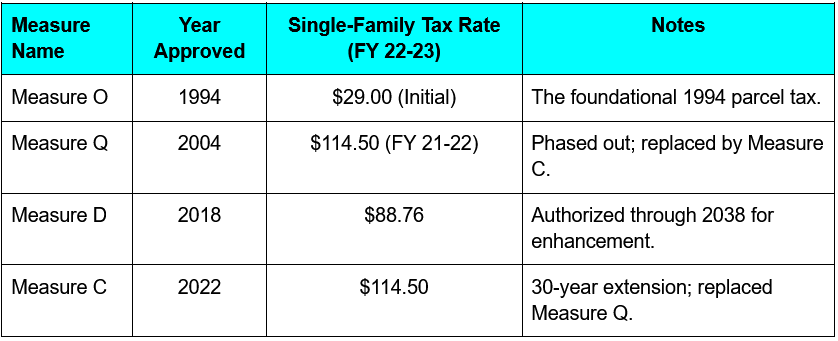
1994 (Measure O): A $29 parcel tax established to halt the library branch closures of the early 1990s.5
2004 (Measure Q): A 20-year extension that established a $9 million General Fund “floor” to prevent the tax from simply replacing city spending.6
2018 (Measure D): Added $75 per single-family parcel tax, and established a $12,992,267 General Fund floor.7
2022 (Measure C): A 30-year extension to generate approximately $18 million annually, and raising the General Fund floor to $14.5 million.8
By fiscal year 2022–23, the cumulative weight of Measures Q, D, and C saw total tax revenue climb to $32.8 million.9 Despite this windfall, the city’s financial situation continued to be characterized by chronic mismanagement.
A 2024 City Auditor’s report found that Oakland fell short of its Measure C General Fund appropriation requirement by $62,406 in fiscal year 2022–23.10
This was more than a mere accounting error; it effectively was a breach of the social and legal contract in the measure itself. According to the legal language of Measure C, if the city fails to meet the minimum General Fund floor specified in the measure, the parcel tax may not be collected. The $62,406 shortfall technically invalidated the city’s authorization to collect up to $18 million in taxes from the voters—a substantial legal, financial and political liability.
In response, the Oakland City Council adopted a resolution declaring a “Severe and Unanticipated Financial Event.” This declaration allowed the city to bypass the mandatory Maintenance of Effort (MOE) for library funding — a tactic city leaders have used to evade minimum requirements in other parcel tax measures like Measure NN, which required a minimum of 700 sworn police officers — a level the city has failed to achieve since the measure passed in 2024.11
As noted by prominent local government think-tank SPUR, Oakland has become overly reliant on special taxes for basic services that should be funded by the General Fund.12
To avoid a “double-dipping” scenario in which the city used parcel taxes to replace General Fund dollars — a practice known as “supplanting”— the measures mandated a minimum General Fund appropriation floor. Under Measure D, this floor was set at nearly $13 million. With the passage of Measure C in 2022, the city’s obligation escalated to a $14.5 million minimum.
Audit data revealed a persistent “administrative inertia” to meeting the measures’ requirements. As noted above, in the very first year of Measure C, the city fell short of the required General Fund funding floor by over $62,000. Furthermore, the city’s Finance Department mistakenly collected $112,000 in taxes from 300 property owners who should have been exempt. The city claimed that these errors occurred because staff were unaware of the new Measure C rules and continued to use outdated Measure Q procedures.
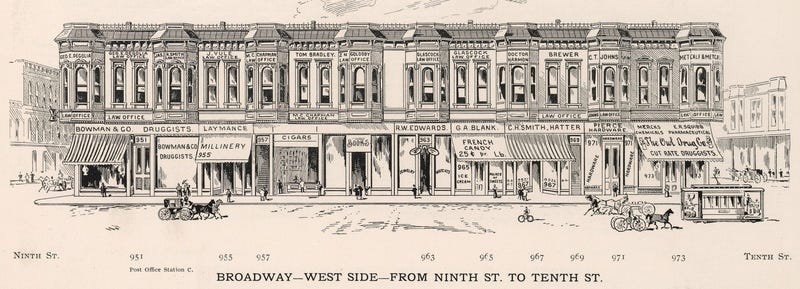
Architectural legacy: 933 Broadway and the historic Old Oakland district
Fortunately, while the city’s fiscal foundation strains under the historic weight of its government’s administrative shortcomings, the physical edifices of the library system find strength in a different kind of history.
The relocation of The Bookmark to 933 Broadway in 2024 was in part a strategic maneuver to anchor neighborhood revitalization efforts in a historic landmark. By occupying an 1880s building at the corner of Broadway and 10th, the FOPL nonprofit created a cherished retail touchstone that serves as a bridge between Old Oakland’s architectural heritage and its modern civic life.
Located across the street from the Oakland Convention Center, the Bookmark retail space is a model of aesthetic and functional integration, featuring a savvy display sensibility and large windows that invite the community into an engaging and affordable retail environment.
The relocation of The Bookmark to Old Oakland was more than a business move; it was a metaphor for institutional resilience. In its relatively new location in Old Oakland, the store has found a home that reflects a commitment to the city’s architectural and cultural soul. By transforming a 19th-century relic into a successful retail anchor, the project demonstrates that “place” remains a vital component of community identity.
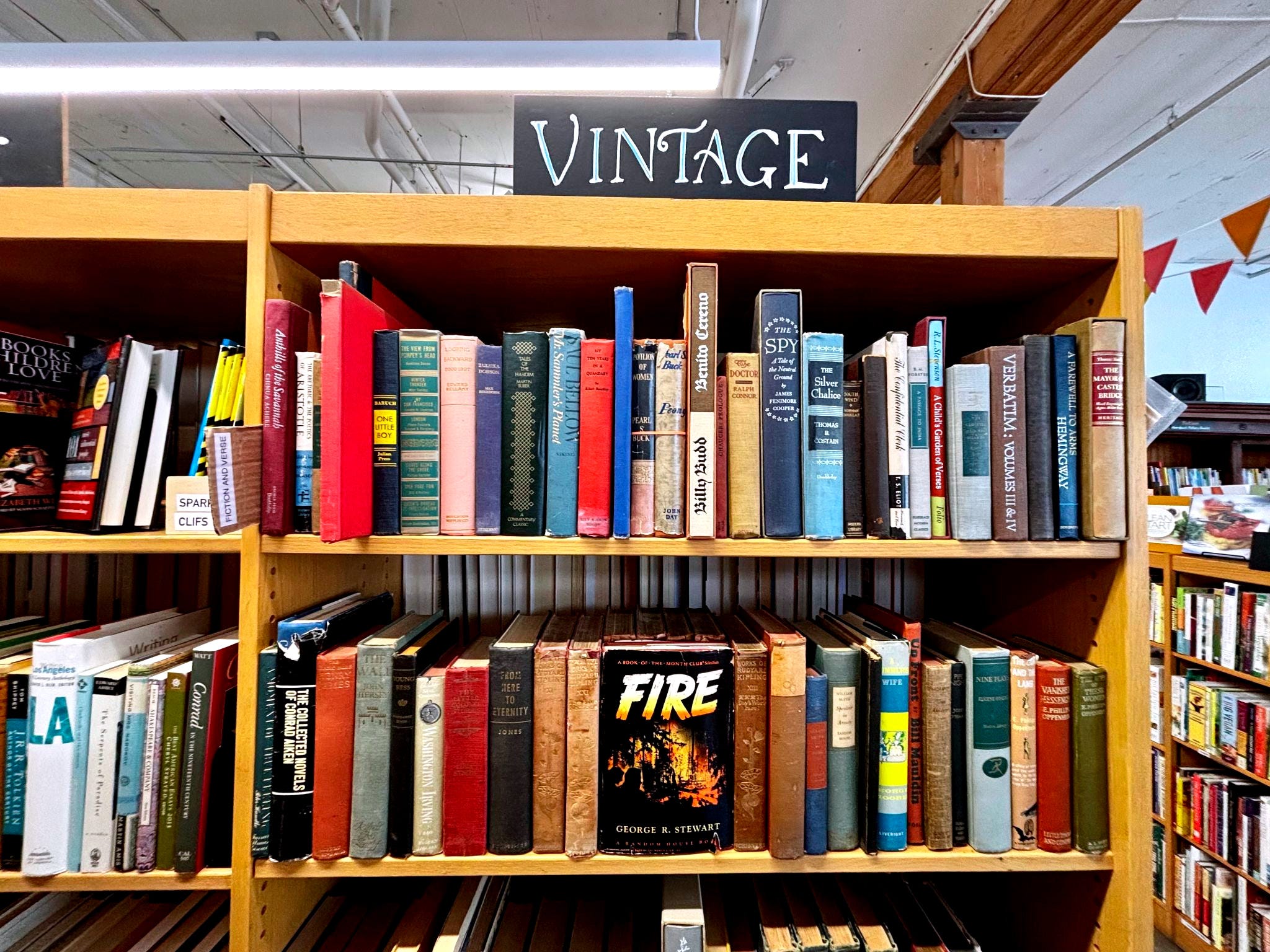
The interior’s welcoming, old-is-new-again atmosphere is achieved through adaptive reuse, from the building itself to the furnishings and used books for sale inside. This use of recycled materials reinforces the theme of the organization’s philanthropy.
According to The Bookmark’s store manager, the move from a previous location described as “dark and off the beaten path” to this high-visibility historic site has catalyzed a “new beginning,” significantly increasing foot traffic and transforming the store into a prized landmark.
Crucially, this preservation was not achieved via city heritage grants, but through the same community spirit that drives the store’s daily operations. The historic beauty and visibility of the physical space now serve as an advertisement for the power of private initiative over government inertia.
The community as the ultimate service provider
The enduring success of The Bookmark and FOPL is a demonstration that private, community-led initiatives possess a transformative power that flourishes when the local government fails to deliver. The success of these organizations proves that the most effective public services are often those originated and maintained by the citizens themselves, bypassing the dysfunction of Oakland’s government bureaucracy and mismanagement.
Become a supporting member of Oakland Report. We rely on our readers to provide financial support to continue our nonprofit work.
This is evident in the impact of services the FOPL provides. According to the FOPL website, when one patron at the Elmhurst Branch used the “Cell Phone Fix-it Clinic” — a program funded by a FOPL grant — they weren’t just getting a technical repair; they were recovering irreplaceable photos of a deceased family member. This human heart of service, alongside programs like the aforementioned “Bike Fix” project and citywide Seed Libraries, represents a level of community care and innovation that standardized government programs rarely achieve.
The Bookmark is a masterclass in a retail model where community waste — used books — is systematically reclaimed and converted into civic capital. While traditional municipal services rely on the heavy hand of public mandate, this operation thrives on the voluntary redistribution of private property — a community-led ecosystem where the value of discarded objects are recaptured and reinvested into the institution that fosters Oakland’s literacy: the public library.
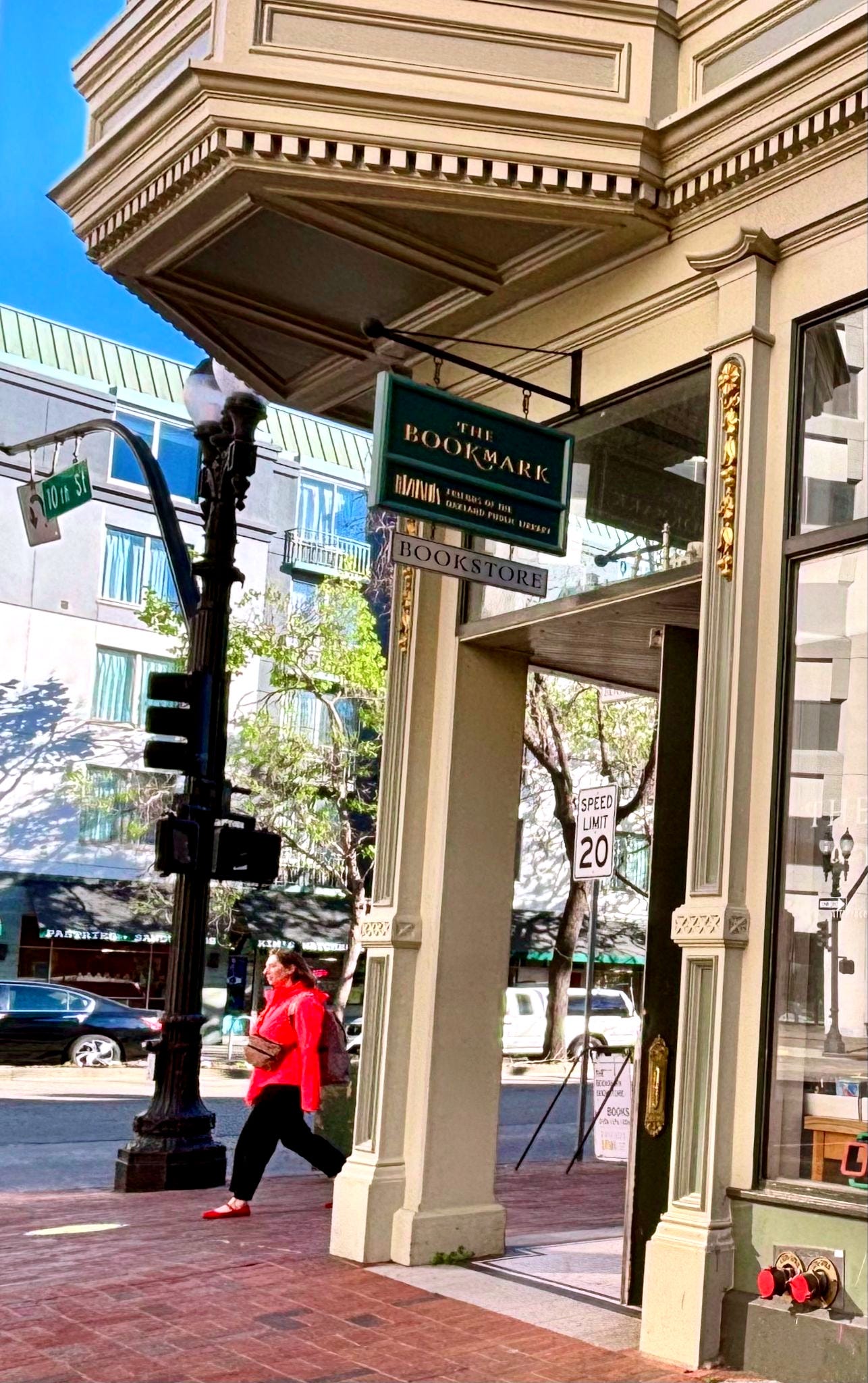
In this respect, The Bookmark is more than a bookstore; it is a monument to the power of community resiliency and the enduring value of the uniquely American spirit of innovation and independence.
As Oakland navigates fiscal uncertainty and chronic financial shortfalls, the Bookmark and FOPL are a testament to the fact that when a community takes ownership of its cultural resources, it creates a model that is not only sustainable but superior.
The Bookmark is, in a way, a living rebuttal to bureaucratic mismanagement: a private, community-led solution to a public funding gap, existing entirely outside the municipal ledger. Now imagine if in addition to this, the city of Oakland were to provide the funding levels required to achieve its public library system’s full potential.
ABOUT THE AUTHOR
Sean S. Reinhart is a former library director, now retired after 26 years in local government. He served as library and community services director for the cities of Hayward and Menlo Park for a combined 16 years, where he helped build Hayward’s new main library and Menlo Park’s new multi-service community center. His post-retirement endeavors include serving as the managing editor of Oakland Report.
Sean and his family have lived in Oakland for 15 years. He grew up in nearby Hayward. Sean enjoys exploring California’s world-renowned coastline, valleys, deserts and mountains. His creative pursuits include writing, printmaking, carpentry, music and visual arts. He enjoys meeting new people, reading, hiking, gardening, and spending time with his family.

The views expressed in our Commentaries do not necessarily reflect the editorial views of Oakland Report or its contributing writers
OAKLAND REPORT
WE NEED YOUR SUPPORT
We rely on you, our readers, to donate to Oakland Report to financially support our work. Please join us as a subscribing member by signing up with a monthly or one-time donation.
We are a 501(c)(3) charitable nonprofit based in beautiful Oakland, California. Our mission is to make truth more accessible to all Oakland residents. Your donation is tax-deductible.
Friends of Oakland Public Library. “Fact sheet: 75 years of library support.” FOPL website, Sept. 19, 2025. https://www.fopl.org/post/fact-sheet-75-years-of-library-support
Friends of Oakland Public Library. “The Bookmark bookstore.” FOPL website, accessed Mar. 29, 2026. https://www.fopl.org/the-bookmark
Rudd, Avita. “The magic of home libraries: why every child needs one.” World Literacy Foundation website, accessed Mar. 29, 2026. https://worldliteracyfoundation.org/the-magic-of-home-libraries-why-every-child-needs-one/
Bond Graham, Darwin. “Ballot measure would maintain millions in Oakland library funding for 30 years.” The Oaklandside, May 3, 2022. https://oaklandside.org/2022/05/03/ballot-measure-c-oakland-library-funding/
Houston, Michael. “Audit of library parcel taxes for Fiscal Year (FY) 2019-20 through FY 2022-23.” Oakland City Auditor’s office, June 13, 2024. https://www.oaklandauditor.com/wp-content/uploads/2024/06/20240613_Audit-of-Library-Parcel-Taxes-FY-2019-20-FY-2022-23.pdf
Ruby, Courtney. “Library Services Retention and Enhancement Act (Measure Q) audit FY 2009-10 through FY 2012-13.” Oakland City Auditor’s office, Dec. 19, 2023. https://www.oaklandauditor.com/wp-content/uploads/2018/06/20131219_Performance_MeasureQ2009-13.pdf
Ballotpedia contributors. “Oakland, California, Measure D, parcel tax for library services (June 2018).” Ballotpedia website, accessed Mar. 29, 2026. https://ballotpedia.org/Oakland,_California,_Measure_D,_Parcel_Tax_for_Library_Services_(June_2018)
Ballotpedia contributors. “Oakland, California, Measure C, library funding parcel tax (June 2022).” Ballotpedia website, accessed Mar. 29, 2026. https://ballotpedia.org/Oakland,_California,_Measure_C,_Library_Funding_Parcel_Tax_(June_2022)
Ibid. Houston, Michael
Ibid. Houston, Michael
Reinhart, Sean S. “Oakland set to declare “extreme fiscal necessity” again, coordinate with unions to increase property taxes.” Oakland Report, Feb. 10, 2026. https://www.oaklandreport.org/p/20260210-oakland-declare-extreme-fiscal-necessity
SPUR contributors. “2020 Oakland Parks and Recreation Preservation, Litter Reduction and Homeless Support Act.” San Francisco Bay Area Planning and Urban Research Association website, accessed Mar. 29, 2026. https://www.spur.org/voter-guide/2020-03/oak-measure-q-parks-and-homelessness-tax
@Juan, thank you for your comment. Our description of the city’s financial maneuvers is accurate and we stand behind it. If the city did not engage in these maneuvers, then there would be none to report on nor describe in plainspoken terms, as we have done. Thank you again for engaging, the discussion is appreciated.
Great article. A little correction: Sven has been gone for months. The Bookmark was already in Old Oakland before relocating to its current location, also in Old Oakland. Thanks for giving The Bookmark some love. It is indeed a gem.