



The City of Oakland has one of the slowest police emergency response times in California.
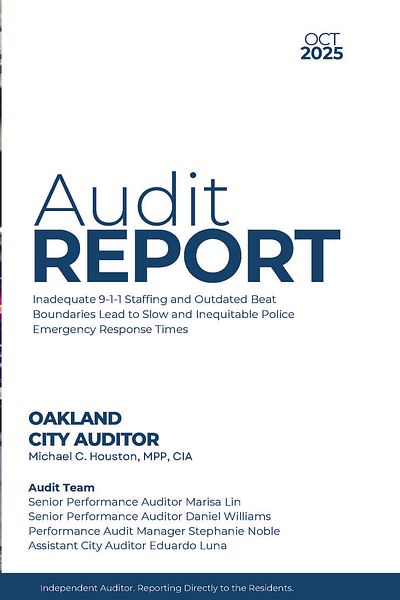
An Oakland city auditor report completed in 2025 found that since 2021, the overall median police response time for Priority 1 calls has been nine minutes — two minutes to dispatch an officer and seven minutes for travel time.1
(Priority 1 calls are immediate threats to life involving violence and/or weapons.)
The auditor’s report also found that Oakland has failed to meet the State of California’s standard for 9-1-1 answer times in 10 of the last 11 years. (The standard is that at least 90% of 9-1-1 calls are answered within 15 seconds.)
The report found that in Oakland in 2023, the average answer time for 9-1-1 calls — the length of time the phone was ringing until someone answered — was 54.8 seconds. Nearly one-third of 9-1-1 calls waited more than a minute to be answered.

Dispatch system was upgraded – but a key time-saving component was not activated
In 2024, the city upgraded its Computer-Aided Dispatch (CAD) system to a more modern platform to improve coordination and reduce response times. The prior system was more than 25 years old. According to city IT officials, Oakland was “the only organization in the world still running” the old version.2
Following the new system’s implementation, 9-1-1 response times improved modestly but remained deficient of state standards.3
A key component of the new platform is a Global Positioning System (GPS)-based tracking feature that would allow dispatchers to see exactly where emergency vehicles are in real time and send the closest available unit to respond.
However, the already-installed GPS functionality in police vehicles has remained inactive for more than a year, limiting the department’s effectiveness in reducing its emergency response times.
This is at least partly due to the fact that the Oakland Police Department (OPD) is required to gain approval for technology use policies from the citizen-run Privacy Advisory Commission (PAC) — approval which the commission amended for reasons we will explain in this article.
Shared technology, different outcomes
The Oakland Fire Department (OFD) and OPD share the same dispatch system, for obvious reasons: there is only one 9-1-1 emergency number, and those calls are handled by the same dispatch system whether the emergency response is handled by OFD or OPD.
OFD has been able to move forward with the new GPS-enabled dispatch functionality. OPD has not.
On July 9, 2024, both OFD and OPD presented their respective proposed policies governing GPS-enabled dispatch to the PAC for approval. The policies were part of the broader CAD system upgrade. Under both OFD’s and OPD’s proposed policies, GPS-enabled dispatch data would be used solely for dispatch and operational purposes and retained for 30 days.4
During the meeting, Assistant Fire Chief Tracy Chin explained that the new GPS-enabled functionality is designed to allow the CAD system “to recommend the closest, most appropriate resource with capabilities required for the emergency incident,” enabling faster and more efficient dispatch.
The PAC approved OFD’s policy, including a 30-day retention limit and employee access to their own data, contingent on a final sign-off by the firefighters union.
OPD’s proposed policy was then presented. It closely mirrored OFD’s.
What followed was a reframing of the GPS-enabled dispatch policy from a technical discussion of a time-saving (and life-saving) technology, to a discussion about a new tool for investigating claims of police officer misconduct.

Turning a time-saving operational tool into a data-collection tool
Community Police Review Agency (CPRA) Executive Director Mac Muir appeared at the July 9, 2024, PAC meeting to offer a public comment that urged commissioners to treat GPS-enabled dispatch data as a tool for police misconduct investigations, not just for operational dispatch purposes.
Muir cited police misconduct cases he had worked on nationally, “from deaths in custody to sexual assault,” where vehicle location and speed data were “critical to ensuring that the facts were established correctly.” He argued that a 30-day retention period for the GPS-enabled dispatch data was too short because misconduct complaints can be filed months later. Muir recommended extending the data retention period to at least one year, and “preferably indefinitely.” He suggested that the GPS data could be used both to discipline as well as to exonerate officers in misconduct cases.
While making his case for a longer data retention period, Muir acknowledged that misconduct investigations already rely on other investigative data, such as body-worn camera footage, which are retained far longer and are routinely used in misconduct cases. He proposed that GPS-enabled dispatch data could supplement, rather than replace, existing investigatory tools.

PAC vice-chair (and former police commissioner) Henry Gage III then expressed support for lengthening the retention period in OPD’s policy. In so doing, Gage reframed the issue from what was a purely operational policy to now one that involved police misconduct investigations. Such investigations already are subject to a raft of other existing policies. Gage noted that deadlines governing misconduct investigations could justify longer retention periods for the GPS dispatch data.
That reframing had consequences. What had initially been introduced as a narrowly scoped dispatch policy for improving emergency response times using GPS-enabled technology (a similar one of which had just been approved for OFD minutes before) became instead a discussion about using the data for potential police misconduct investigations.
The result was that a potential time-saving technology became entangled in disciplinary policy debates, and OPD’s deployment of the technology stalled, even as OFD moved forward with GPS.
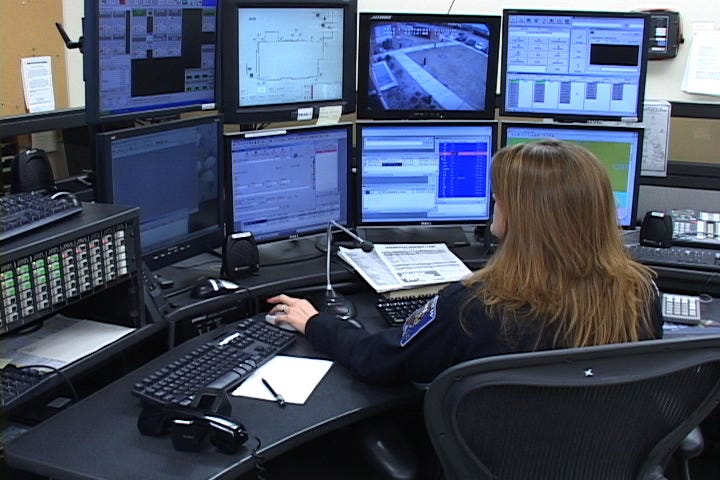
GPS is a core component of modern time-saving dispatch technology
Lost in the PAC’s policy debate was an important operational reality: GPS-enabled dispatch is not an optional tool — it is a core component of modern, efficient emergency response.
Both Fire and IT officials emphasized that disabling the dispatch system’s GPS functionality would undermine the effectiveness of the system and a key goal of the CAD upgrade: to reduce emergency response times.
IT Director Tony Batalla described GPS-enabled dispatch as a “normal operation of the system” and warned that shutting it down would “essentially disable the automated routing components that enable really efficient dispatching.” Assistant Fire Chief Chin added that while emergency responders could operate without it, doing so would “significantly impact our ability to provide service to the citizens in a timely manner.”
Their warnings aligned with the city auditor report’s findings that slow response times are driven not only by staffing shortages but also by dispatch inefficiencies. The auditor recommended that OPD activate existing GPS technology in patrol cars to more efficiently dispatch the nearest available unit to respond to calls.5

The report noted that longer, less-efficient dispatch processes are a major contributor to emergency response delays. For example, response times for Priority 2 calls in East Oakland were found to be up to two hours longer than in the westward areas of the city.
(Priority 2 calls involve in-progress situations with the potential for violence or damage to property, as well as incidents that have just occurred, such as 9-1-1 hangups, disturbing the peace, alarms, and stolen vehicles.)
The auditor’s report identified GPS-enabled dispatch as a readily available tool to improve response times without adding staffing. This is a critical point given Oakland’s ongoing police recruitment and retention challenges.
Oaklanders cannot afford preventable delays in emergency police dispatch. Slow police response times reduce public safety effectiveness and increase the risk of harm to residents. The auditor’s report makes clear that continued failure to deploy available time-saving tools like GPS-enabled dispatch adds to that risk.
Consequence: roadblock
CPRA director Muir moved to use the GPS dispatch data for investigative purposes for which the CAD system was never intended — and which the CPRA director himself admitted would be merely supplementary to the other potent investigative tools, like body-worn cameras, already at the CPRA’s disposal.
As a result, the police department’s dispatch system remains stuck in limbo. After the PAC meeting, the OPD’s policy on use of GPS-enabled dispatch was marked as “withdrawn with no new date” on the City Council Rules and Legislation Committee agenda for July 11, 2024.6
The item has not returned to the agenda since, and no council-level decision has been made to resolve the delayed implementation, as far as we are aware.
Among the concerns about longer data retention mentioned during the PAC discussion were data privacy concerns for the people in the vehicles, the financial and technical impacts of increased storage, and the need to meet and confer with labor groups and attorneys to understand the implications. It's unclear why the city council has not scheduled the policy for their review, and no specific reason has been given of which we are aware.
The PAC and CPRA’s moves to reframe OPD’s GPS-enabled dispatch policy around data collection for police misconduct investigations instead of the operational needs for which the system was designed, sidelined the technology from being deployed for its intended purpose: enabling faster and more efficient police emergency response for the public. This was despite the technology having been already paid for and installed in police patrol vehicles, and having been identified by extensive research as essential to improving Oakland’s slow emergency response times.
[Editor’s note, Jan. 2, 2026. This article was updated from its original version to make corrections and reflect new information we received shortly after the article was published.
The updates were: to make clearer that the PAC recommended (not blocked) an amended version of the GPS use policy with a longer retention period; to offer more detail on the concerns about a longer retention period discussed at the PAC meeting; and to emphasize that the city council has yet to take up the policy for discussion.
Some of these corrections were brought to our attention by our alert readers — Thank you!
We, the editors apologize to the author of this article — we missed their final draft changes to the article before we published it. These updates reflect the author’s final draft changes, and their original intent.]
Houston, Michael C., et al. “Audit Report: Inadequate 9-1-1 Staffing and Outdated Beat Boundaries Lead to Slow and Inequitable Police Emergency Response Times.” Office of the City Auditor. Oakland, California, Oct. 7, 2025. https://www.oaklandauditor.com/wp-content/uploads/2025/10/20251008_9-1-1-Emergency-Response-Times-Audit.pdf
City of Oakland. “Privacy Advisory Commission meeting video.” Oakland, California, July 9, 2024. https://oakland.granicus.com/player/clip/6245
Jones, Velena. “Oakland’s 911 answer times dramatically improve, new numbers show.” NBC Bay Area, July 24, 2025. https://www.nbcbayarea.com/news/local/oakland-911-answer-times-improves/3922136/
City of Oakland. “Privacy Advisory Commission meeting agenda.” Oakland, California, July 9, 2024. https://www.oaklandca.gov/files/assets/city/v/1/public-meetings/privacy-advisory-commission/2024/privacy-advisory-commission-agenda-packet-for-7-9-2024.pdf
Ibid. Houston, Michael C., et al.
City of Oakland. “City Council Rules and Legislation Committee meeting agenda.” OPD CAD Automatic Resource Location System. July 16, 2024, agenda item #3.1. https://oakland.legistar.com/LegislationDetail.aspx?ID=6773047&GUID=61387AF0-34FF-4516-82E5-08320C673567&Options=&Search=
Why can't the GPS dispatch move forward and meanwhile details of using the system for police misconduct be conducted? I hope people who lose their lives due to slow response times don't sue Oakland...
Why this important component of 911 system has not been pursued by the management of the city’s 911 operations or OPD is not clear. Muir is long gone. This should be brought to the City Council. This reminds me of the discovery that HR had several hundred 911 applicants for a year with no action taken. There’s so little on the recent CC agenda that opportunity is not an excuse.